
 Save to Pinterest
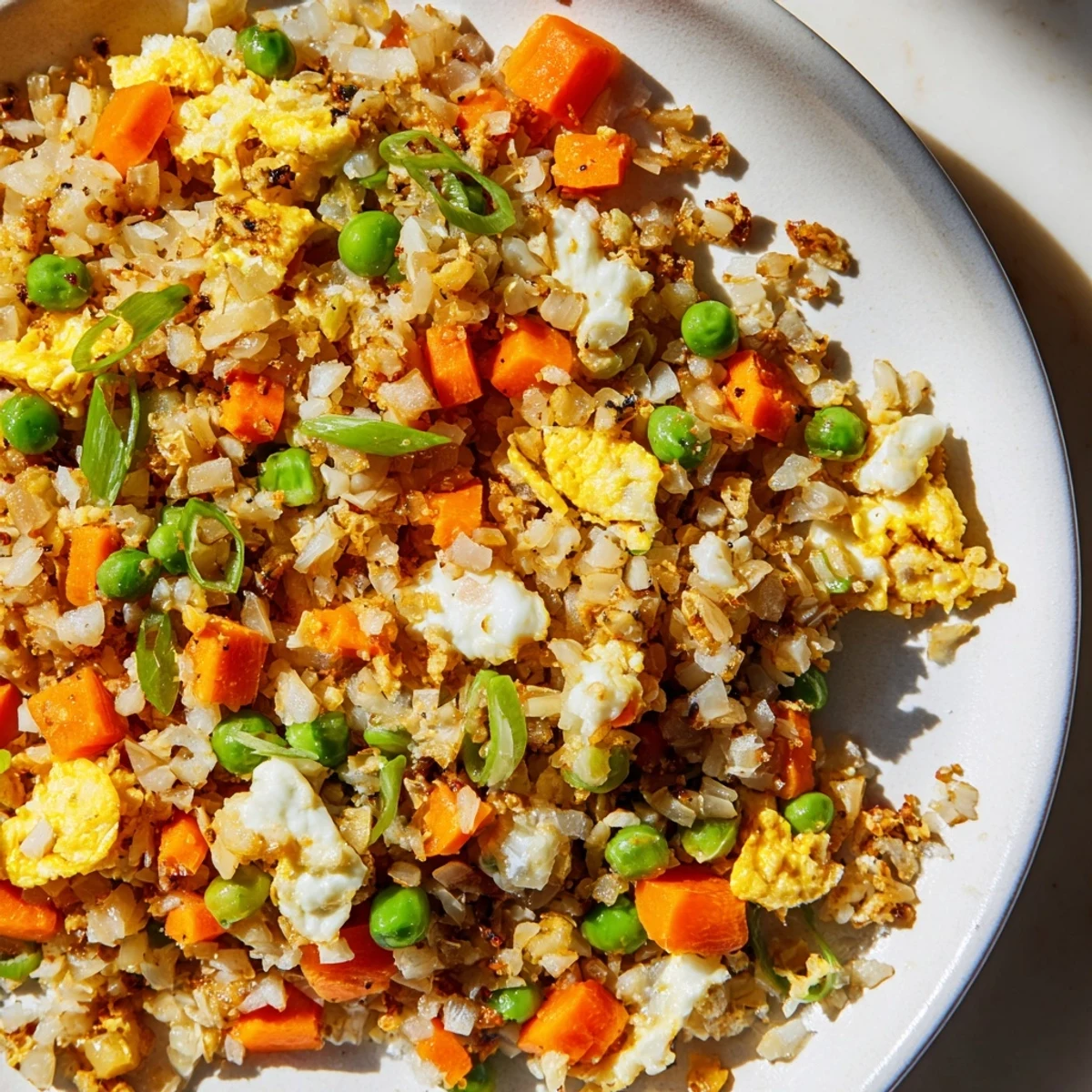
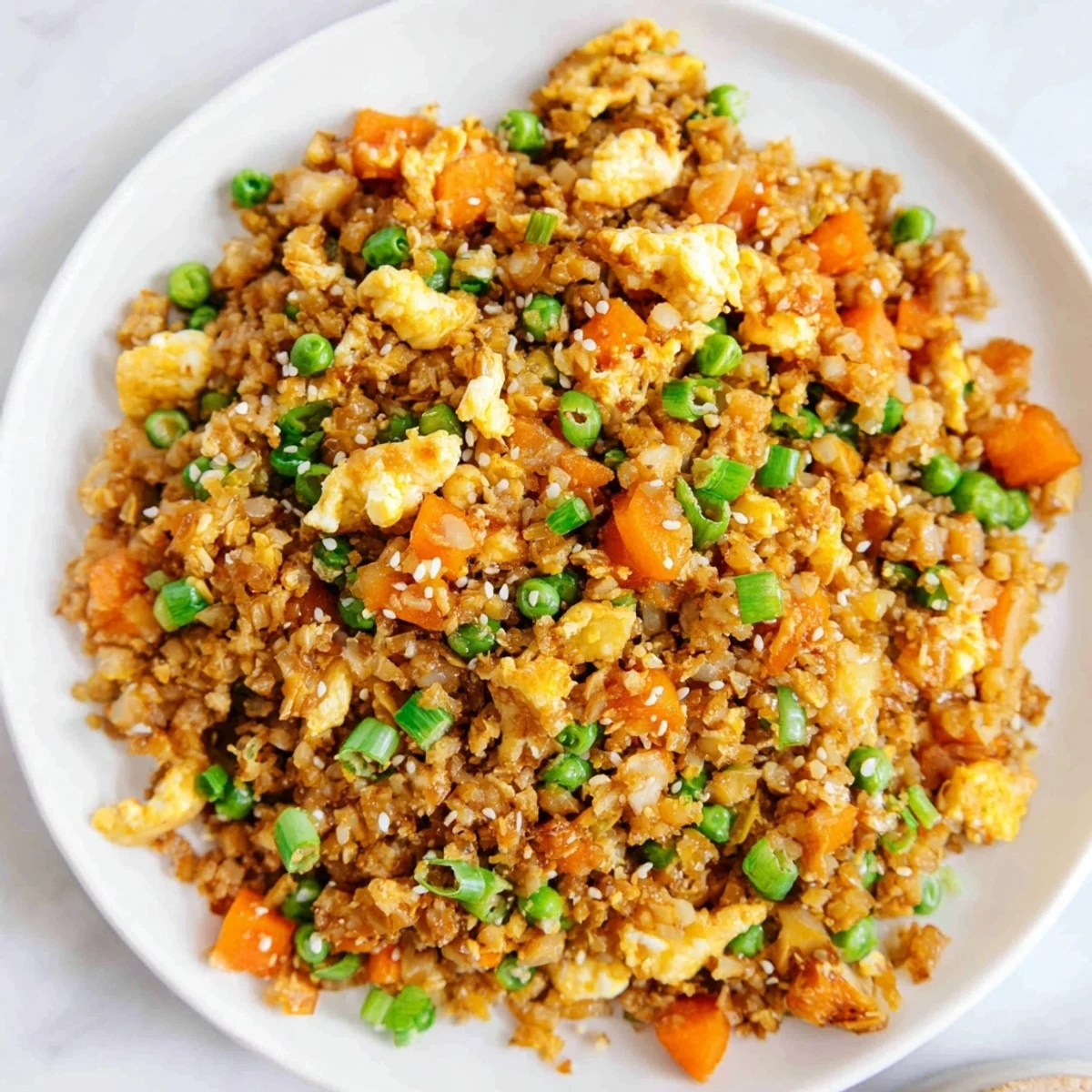
 This vibrant dish transforms humble cauliflower into a satisfying grain-free alternative that captures all the savory essence of traditional Asian-style fried rice. The cauliflower rice provides a perfect neutral base that absorbs the rich flavors of soy sauce, toasted sesame oil, garlic, and fresh ginger while maintaining a pleasant, slightly crunchy texture.
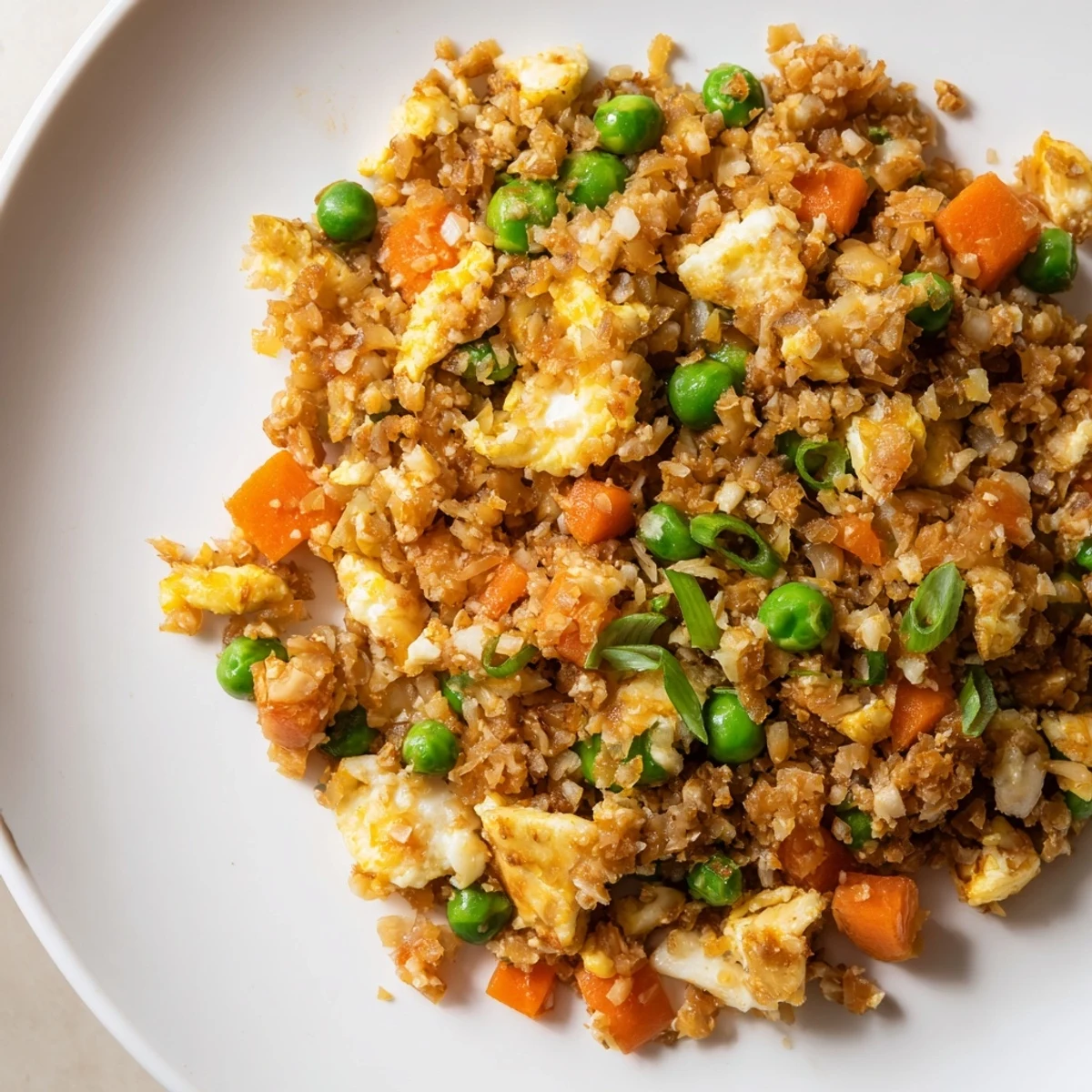
Each bowl delivers colorful vegetables including sweet carrots, bright green peas, and aromatic spring onions, creating visual appeal and balanced nutrition. The scrambled eggs add protein and richness, making this a complete meal that keeps you feeling satisfied without the heaviness of traditional rice dishes.
Ready in just 25 minutes, this versatile dish adapts beautifully to your preferences—add protein like chicken or shrimp, incorporate extra vegetables, or adjust the spice level with sriracha. It's an excellent choice for meal prep, as the flavors develop even more beautifully overnight.
The first time I made cauliflower rice, I was honestly skeptical—how could chopped vegetables possibly replace the comfort of fluffy grains? But after that first bite, I was converted by the surprising texture and how it soaked up flavors just like the real thing. Now its my go-to when I want something satisfying without the heavy carb load.
Last Tuesday, my friend Sarah came over for dinner still talking about how she needed to cut back on carbs but loved fried rice too much to give it up. I made this without telling her the secret, and halfway through the bowl she stopped chewing and said wait—this isnt rice. Watching her genuinely surprised face as she went back for seconds was pretty much the best endorsement.
Ingredients
- 1 medium head cauliflower: Pulse it in batches rather than overloading your food processor for the most rice-like texture
- 1 medium carrot, diced: Adds sweetness and color that makes the dish feel complete
- 1 cup frozen peas: I always keep frozen peas on hand for exactly this kind of situation
- 4 spring onions: Separating the white and green parts gives you layers of flavor
- 2 cloves garlic: Freshly minced makes all the difference here
- 1-inch piece fresh ginger: Grate it right before adding so the oils stay vibrant
- 2 large eggs: Room temperature eggs scramble more evenly
- 2 tbsp soy sauce: Tamari works perfectly if you need gluten-free
- 1 tbsp toasted sesame oil: This is the finish that makes it taste restaurant-quality
- ½ tsp freshly ground black pepper: Freshly cracked really does taste better
- ½ tsp salt: Adjust based on how salty your soy sauce is
- 1 tbsp vegetable oil: A neutral oil lets the other flavors shine
Instructions
- Rice your cauliflower:
- Pulse cauliflower florets in short bursts until they resemble grains of rice, being careful not to overprocess into mush.
- Heat your wok:
- Warm vegetable oil in a large wok or skillet over medium-high heat until it shimmers slightly.
- Build your aromatics:
- Add white spring onion parts, garlic, and ginger, stirring constantly for about 1 minute until the fragrance fills your kitchen.
- Soften the carrots:
- Toss in diced carrots and cook for 2 minutes until they start yielding to the edge of your spatula.
- Add the bulk:
- Stir in peas and cauliflower rice, cooking for 3-4 minutes while tossing frequently until everything is tender-crisp.
- Scramble the eggs:
- Push everything to one side, crack eggs into the empty space, and scramble until just set before folding them through.
- Season it perfectly:
- Drizzle with soy sauce and sesame oil, then sprinkle with pepper and salt, tossing until every piece is coated.
- Finish and serve:
- Remove from heat immediately, scatter with green spring onion parts, and serve while still steaming hot.
 Save to Pinterest
 This recipe became my emergency dinner solution after a long day at work when I still wanted something that felt like a real meal. Theres something deeply satisfying about transforming a humble head of cauliflower into something that feels so complete and nourishing.
Making It Your Own
The beauty of this dish lies in its adaptibility—swap frozen peas for corn, add bell peppers for crunch, or throw in baby spinach at the end. Ive learned that almost any vegetable works as long as you keep the pieces roughly the same size so everything cooks evenly.
Protein Additions
While the eggs provide some protein, I often add leftover roasted chicken, quick-cooked shrimp, or crispy tofu cubes to make it more substantial. The key is adding pre-cooked proteins at the end so they dont become rubbery or tough.
Sauce Variations
Don't be afraid to play with the sauce base—a drizzle of oyster sauce, a spoonful of chili garlic paste, or even a splash of rice vinegar can completely transform the profile. The soy-sesame foundation is classic, but this rice is remarkably forgiving with flavor experimentation.
- Coconut aminos make an excellent soy-free alternative
- A pinch of red pepper flakes brings gentle warmth without overpowering
- Extra sesame oil at the end never hurt anyone
 Save to Pinterest
 Hope this becomes one of those weeknight staples you turn to again and again, just like it has in my kitchen.
Recipe Questions
- → Is cauliflower rice better for you than regular rice?
-
Cauliflower rice offers significantly fewer calories and carbohydrates while providing more fiber and essential vitamins than white rice. It's an excellent option for those following low carb, keto, or gluten-free lifestyles without sacrificing satisfaction or flavor.
- → Can I make cauliflower rice without a food processor?
-
Absolutely. Use a box grater to grate the cauliflower florets into rice-sized pieces, or chop finely with a sharp knife. The texture may vary slightly but will still work perfectly in this dish.
- → How long does cauliflower fried rice keep in the refrigerator?
-
Store in an airtight container for up to 4 days. The flavors often improve overnight as the seasonings meld together. Reheat gently in a skillet or microwave, adding a splash of water if needed to refresh the texture.
- → Can I freeze cauliflower fried rice?
-
Yes, freeze portions in freezer-safe containers for up to 2 months. Thaw overnight in the refrigerator before reheating. Note that the texture may become slightly softer after freezing, but the taste remains excellent.
- → What vegetables work well in this dish?
-
Beyond carrots and peas, try adding diced bell peppers, corn, snap peas, broccoli, or mushrooms. The versatility allows you to use whatever vegetables you have on hand while maintaining the delicious Asian-inspired profile.
- → How can I add more protein to this dish?
-
Stir in cooked chicken, shrimp, or tofu during step 7. Alternatively, increase the eggs to 3-4 or add edamame. These additions transform it into an even more substantial main dish while keeping the cooking time minimal.