
 Save to Pinterest
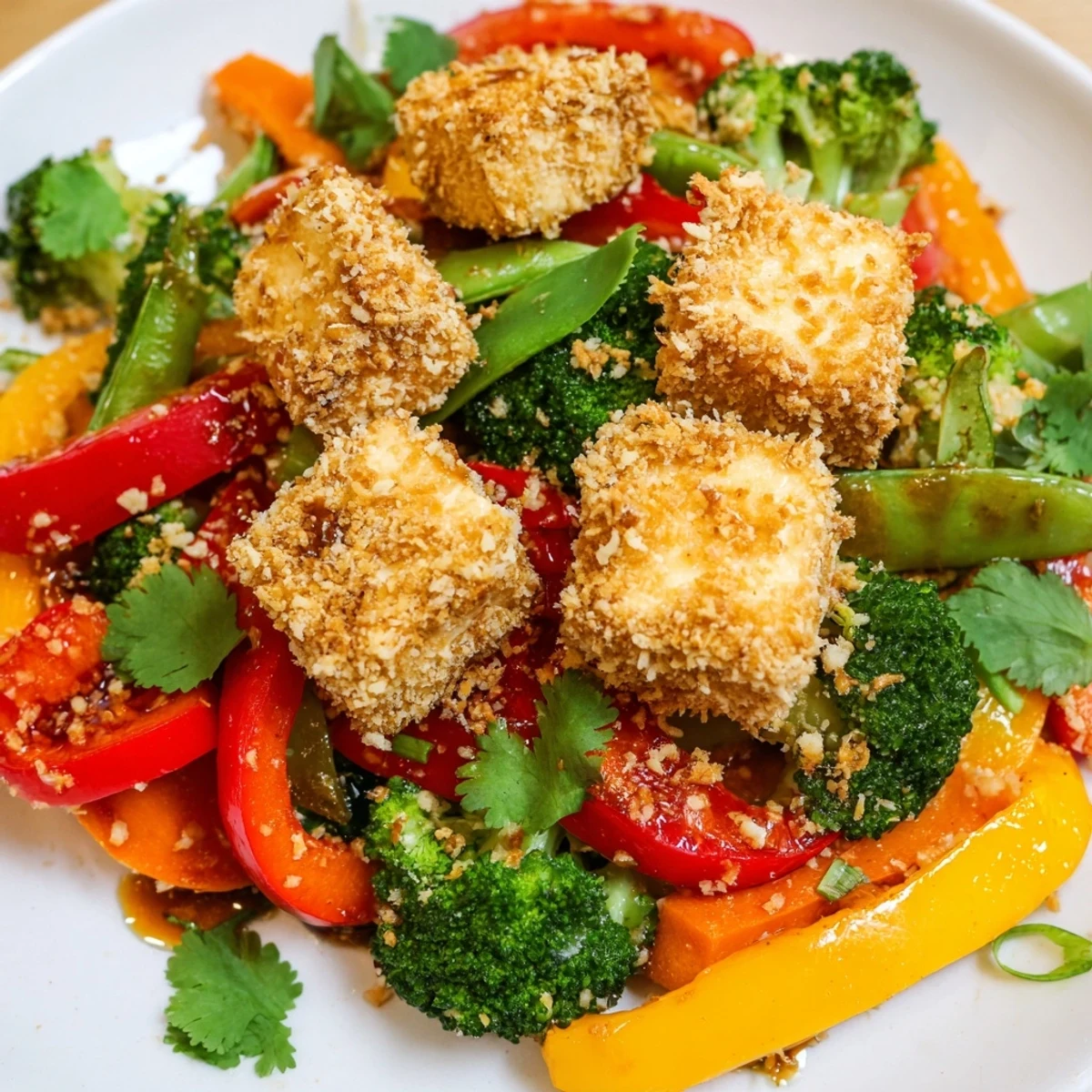
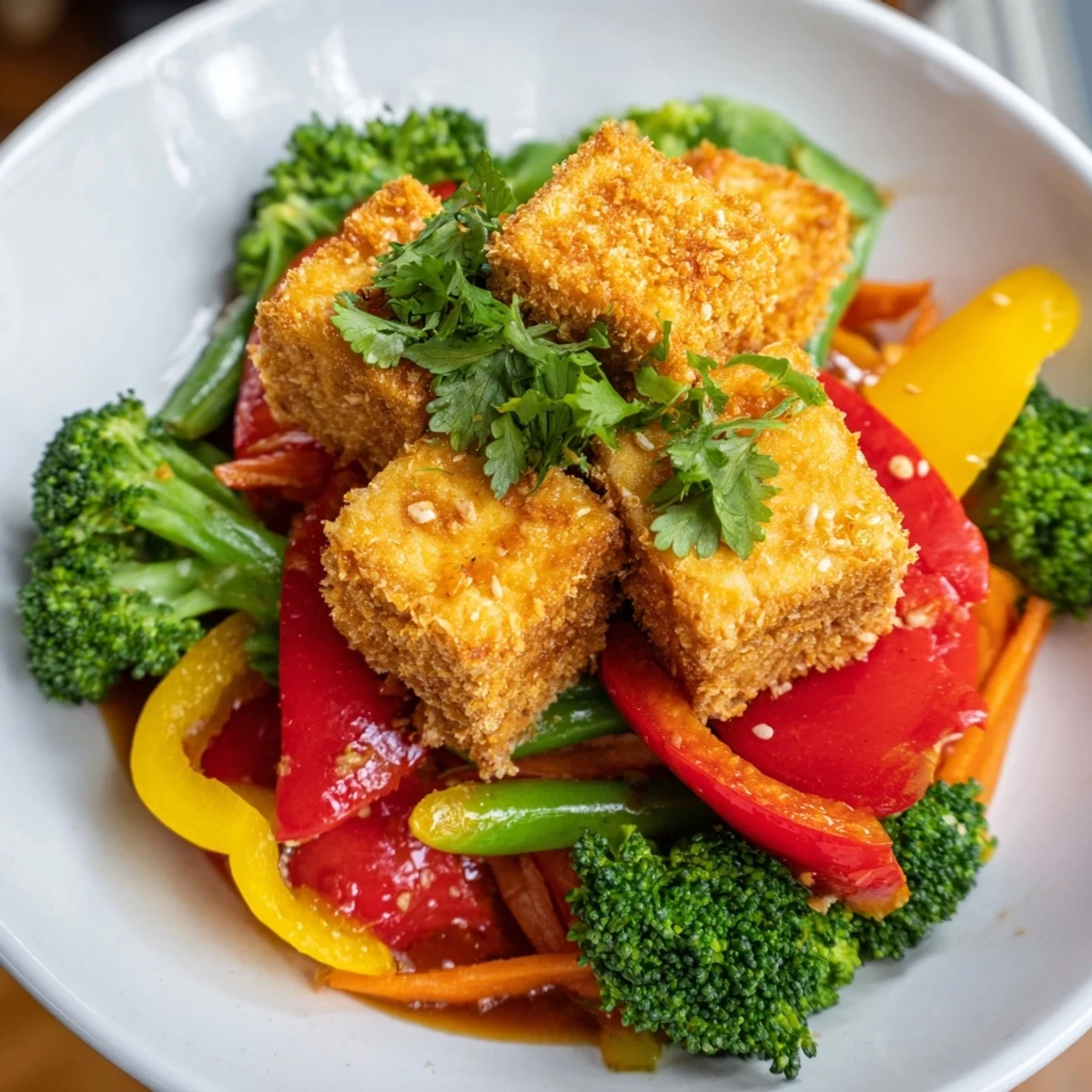
 This dish features extra-firm tofu cubes coated in shredded coconut and panko, fried until golden and crispy. Served alongside a medley of stir-fried bell peppers, broccoli, carrot, sugar snap peas, and spring onions tossed in a tangy soy, ginger, and maple sauce. Garnished with fresh cilantro and lime wedges, it offers layers of texture and bold flavors in an easy, plant-based main dish.
The first time I made coconut tofu, I was standing in my kitchen on a rainy Tuesday, skeptical about whether anything breaded in shredded coconut could possibly be crispy. My friend had raved about this technique, and I was determined to prove her wrong—or, as it turned out, completely right. When that first cube hit the hot oil and the kitchen filled with the most incredible toasty-coconut aroma, I knew I'd stumbled onto something special. Now, this dish is what I reach for when I want to feel like I'm cooking something restaurant-worthy without the fuss.
I made this for a dinner party once when I was nervous about feeding a mixed group of meat-eaters and plant-based friends. Halfway through cooking, my partner came into the kitchen and just stood there inhaling—that look on his face told me I'd nailed it. Watching everyone at the table dig in without hesitation, hearing the satisfying crunch of the coconut tofu on their forks, felt like a small victory. That night cemented this recipe as my go-to when I want to cook something that feels special but doesn't require stress.
Ingredients
- Extra-firm tofu (400 g): Press it well—this step genuinely matters because excess moisture is the enemy of crispiness, and you want those cubes to fry up golden, not steam.
- Cornstarch (3 tbsp): This is what creates that satisfying texture; it combines with the egg replacer layer to seal in crispiness.
- Shredded coconut and panko (½ cup each): The coconut adds flavor and richness while the panko provides structure—together they're the reason this tastes special, not boring.
- Coconut milk (3 tbsp): Acts as your binding layer between the cornstarch and the breading; it keeps everything stuck together while frying.
- Sea salt and black pepper: Don't skip seasoning the cornstarch mixture; this is where half your flavor comes from.
- Red and yellow bell peppers, broccoli, carrot, sugar snap peas: The colors matter here—they stay vibrant and slightly crisp when you don't overcrowd the pan or cook them too long.
- Soy sauce, rice vinegar, maple syrup, fresh ginger, garlic, sesame oil: This sauce is balanced—tangy, slightly sweet, with enough ginger to sing without overwhelming everything else.
Instructions
- Press and cube your tofu:
- Wrap your pressed tofu block in a clean kitchen towel and let it sit for a few minutes to release moisture—this step is honestly non-negotiable if you want crispy results, not soggy disappointment.
- Set up your breading station:
- Three shallow bowls in a row: cornstarch mixed with salt and pepper, coconut milk in the second, and coconut mixed with panko in the third. This assembly-line approach keeps your hands cleaner and the coating process smooth.
- Coat each cube:
- Work quickly but gently—dredge in cornstarch, dip in coconut milk so it's barely wet, then roll in the coconut-panko mixture until fully covered. The thicker your coating, the crispier your result.
- Fry until golden:
- Heat oil in a large skillet over medium heat and listen for that subtle sizzle when you add the first cube. Fry in batches (don't crowd the pan) for about 2–3 minutes per side until the edges are deep golden brown and the coconut has toasted to a nutty color.
- Stir-fry your vegetables:
- Get your oil screaming hot in a wok or large skillet, add the harder vegetables first (carrots and broccoli need 2 minutes), then the faster-cooking peppers and snap peas. Keep the heat high and the motion constant so everything stays bright and slightly al dente.
- Make and coat with sauce:
- Whisk your sauce ingredients in a small bowl—the balance of salty, tangy, and sweet should make you want to lick the whisk. Pour it over the hot vegetables, toss everything for a minute, then add the spring onions right at the end so they stay fresh and slightly crisp.
- Assemble and serve:
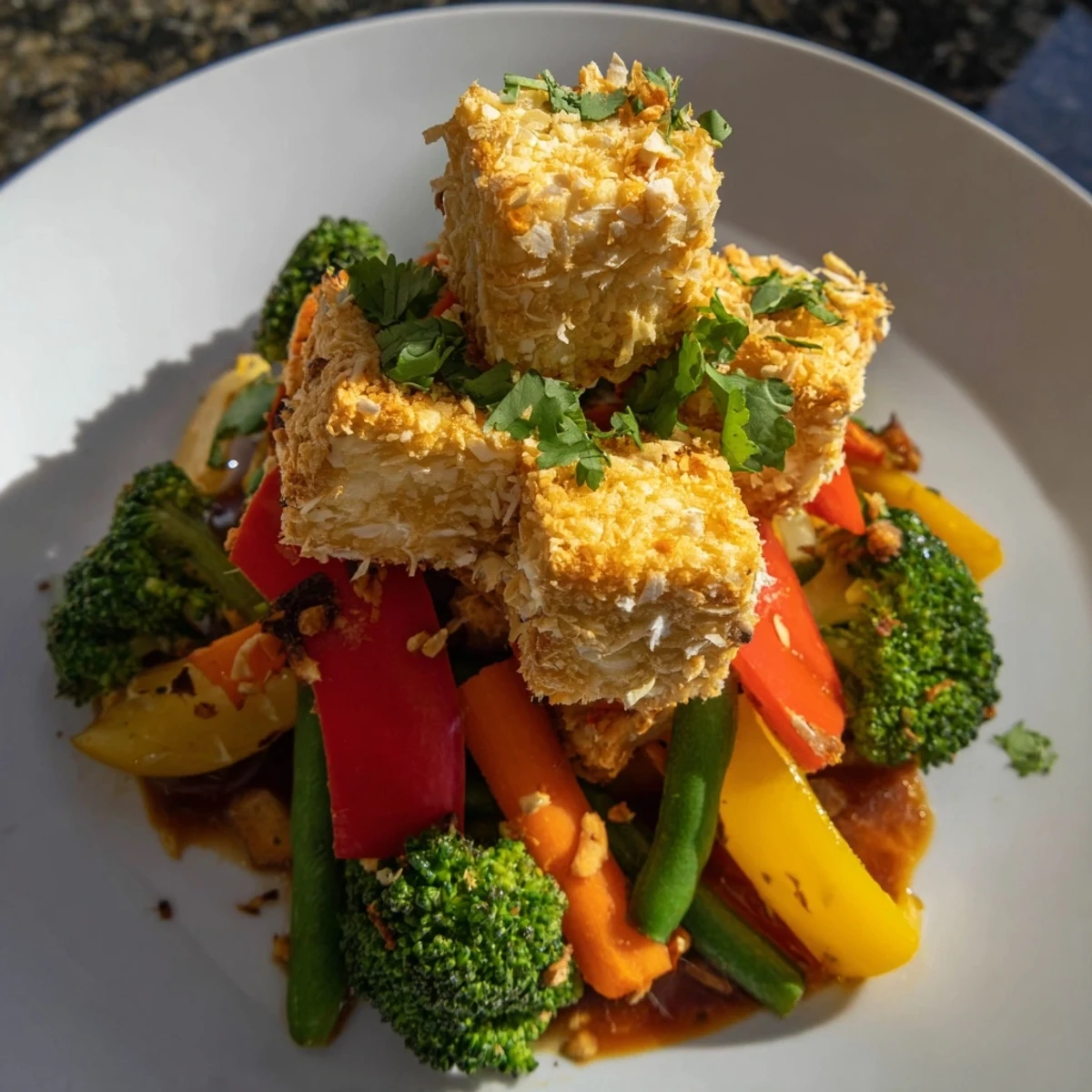
- Pile your stir-fried vegetables on a plate or over rice, crown with the crispy tofu cubes, scatter fresh cilantro on top, and serve with lime wedges on the side. Let people squeeze their own lime—it makes all the difference.
 Save to Pinterest
 There's something deeply satisfying about watching someone's face light up when they bite into crispy tofu and realize it's actually delicious. This dish has a way of converting skeptics, not through fancy techniques but through honest, simple flavors that actually work together. It reminds me why I cook—not to impress, but to create moments where everyone at the table is too busy eating to talk.
Making Tofu Actually Crispy
The secret isn't magic—it's moisture control and heat. Most people's tofu disappointment comes from either not pressing enough or frying at too low a temperature. I learned to think of tofu like a blank canvas: it becomes what you treat it as, and if you treat it with intention (proper pressing, adequate breading, proper heat), it transforms into something genuinely exciting. The coconut crust specifically works because it fries faster than traditional breadcrumbs, creating a delicate, golden shell that stays crispy even after a few minutes of sitting.
Vegetables That Stay Vibrant
The trick to stir-fried vegetables that don't turn into sad, mushy sadness is high heat, dry vegetables (pat them dry!), and knowing when to stop cooking. I used to overcrowd my pan and wonder why everything steamed instead of fried; now I cook in batches and use a wok when possible because the sloped sides make constant movement easier. The sauce gets added at the very end—just enough time to coat everything without cooking off the bright colors and crisp texture you worked hard to achieve.
Customizing Your Bowl
This recipe works beautifully as written, but it's also forgiving enough to adapt to whatever vegetables you have on hand or whatever you're craving that day. I've swapped in mushrooms (they get wonderfully caramelized), baby corn, zucchini, or even fresh bok choy depending on the season and what looked good at the market. The sauce stays the same, the tofu stays the same, and suddenly you have something that feels both familiar and new every time you make it.
- Snow peas, mushrooms, or baby bok choy all work beautifully as substitutes or additions to the veggie mix.
- Serve over jasmine rice, brown rice, cauliflower rice, or noodles—the crispy tofu adapts to whatever base appeals to you.
- Make extra sauce if you love it glossy and coating everything; make less if you prefer everything lightly kissed with flavor.
 Save to Pinterest
 This is the kind of recipe that quietly becomes part of your regular rotation because it works every time and tastes genuinely crave-worthy. Whether you're cooking for yourself on a quiet weeknight or feeding a crowd, it never feels like a compromise—it feels like choosing something delicious.
Recipe Questions
- → How do I get tofu crispy?
-
Press the tofu to remove moisture, then coat with cornstarch, coconut milk, and a coconut-panko mix before frying in hot oil until golden and crisp.
- → Can I use other vegetables?
-
Yes, you can swap in mushrooms, baby corn, zucchini, or your favorite veggies to suit your taste.
- → What sauce complements the stir fry?
-
A tangy blend of soy sauce, rice vinegar, maple syrup, fresh ginger, garlic, and toasted sesame oil enhances the vegetables and tofu beautifully.
- → How long does it take to prepare this dish?
-
Preparation takes about 25 minutes and cooking around 20 minutes, totaling approximately 45 minutes for the complete meal.
- → Any tips for a gluten-free version?
-
Use gluten-free panko and tamari instead of regular panko and soy sauce to keep the dish gluten-free.