
 Save to Pinterest
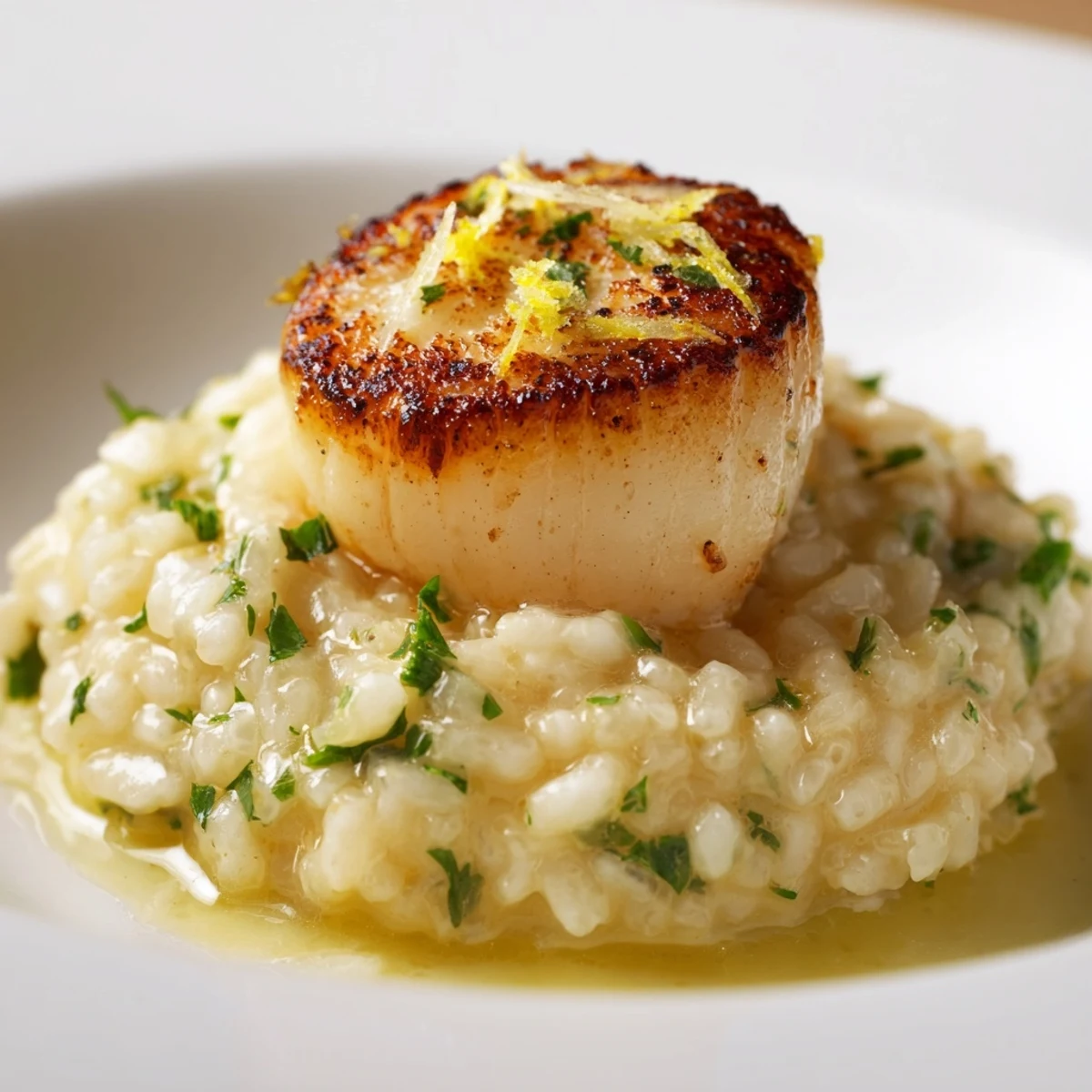
 This dish features tender sea scallops seared to golden perfection, infused with a zesty lemon-garlic butter sauce. They're served atop a creamy Parmesan risotto made with Arborio rice, shallots, white wine, and broth, cooked slowly to a rich, velvety texture. The scallops are seasoned simply with salt, pepper, and fresh parsley, offering a bright, balanced flavor profile. Perfect for an elegant yet approachable main course, it pairs well with crisp white wines like Sauvignon Blanc or Pinot Grigio.
There's something about the sound of scallops hitting a hot pan that still catches me off guard—that sharp, decisive sizzle that promises something good is about to happen. Years ago, a friend visiting from the coast brought me a small bag of fresh sea scallops and challenged me to not overthink them, which, of course, made me overthink everything. But that night, standing in my kitchen with butter foaming and garlic perfuming the air, I understood: scallops don't need rescue, they need respect and a hot pan. Now this lemon-garlic version with creamy risotto is the dish I return to whenever I want to feel a little sophisticated without the stress.
I made this for my partner's birthday last spring, and I'll never forget how the kitchen filled with that tangy, garlicky steam the moment I added the lemon to the hot butter. The risotto was still releasing those soft, starchy clouds, and the scallops were golden and delicate, and somehow it all came together on the plate like it was meant to. That's when I realized this dish isn't fancy because of fancy ingredients—it's fancy because it takes care and attention, the kind that says, 'I made this for you.'
Ingredients
- Large sea scallops (1 lb): Pat them completely dry before cooking—moisture is the enemy of a good sear, and I learned this the hard way after years of soggy, steamed scallops.
- Olive oil: Nothing fancy, but it needs to get hot enough to shimmer before the scallops touch the pan.
- Unsalted butter (4 tablespoons total): Use real butter, not margarine, because the flavor difference shows up immediately in that final sauce.
- Garlic cloves (2, minced): Fresh is non-negotiable here; the garlic should almost perfume your kitchen as you cook.
- Lemon (zest and juice): A microplane makes zesting easier, and fresh lemon juice tastes incomparably brighter than bottled.
- Fresh parsley (2 tablespoons, chopped): This adds color and a fresh note that keeps the dish from feeling heavy.
- Kosher salt and black pepper: Season generously but taste as you go.
- Arborio rice (1 1/4 cups): This starchy, short-grain rice is what makes risotto creamy without cream, though a splash of cream at the end doesn't hurt.
- Shallot (1 small, finely diced): Shallots are sweeter and more delicate than onions, and they dissolve into the risotto almost invisibly.
- Dry white wine (1/2 cup): Something you'd actually drink—cheap wine makes cheap-tasting risotto.
- Chicken or vegetable broth (4 cups, warmed): Keep it warm in a separate pot; cold broth will cool the rice and slow the cooking process.
- Parmesan cheese (1/2 cup, freshly grated): Pre-grated cheese has anti-caking agents that prevent it from melting smoothly, so grate your own.
- Heavy cream (1/4 cup, optional): If you're in the mood for extra richness, this is your invitation to indulge.
Instructions
- Warm your broth and gather your mise en place:
- Before you start cooking, pour your broth into a separate saucepan and keep it at a gentle simmer in the background. Dice your shallot, mince your garlic, zest and juice your lemon, and pat your scallops completely dry with paper towels.
- Start the risotto base:
- In a large saucepan over medium heat, melt the 2 tablespoons of butter with 1 tablespoon of olive oil. When the butter foams, add your diced shallot and cook gently until it softens and becomes translucent, about 2 minutes—you want it tender, not browned.
- Toast the rice:
- Add your Arborio rice to the pan and stir constantly for 1 to 2 minutes, listening for a faint crackling sound as the rice grains toast slightly. This step adds a subtle nutty flavor that makes risotto taste rich and intentional.
- Deglaze with wine:
- Pour in the dry white wine and stir gently until it's completely absorbed by the rice, which usually takes about a minute. The wine adds acidity and depth that balances the richness to come.
- Build the risotto with patience:
- Add your warm broth about 1/2 cup at a time, stirring gently and waiting for each addition to be almost completely absorbed before adding the next. This gradual process, which takes 18 to 22 minutes total, is what coaxes the starch from the rice and creates that signature creamy texture.
- Finish the risotto:
- When the rice is tender but still has a slight firmness in the center (al dente), remove the pan from heat and stir in the freshly grated Parmesan cheese and heavy cream if using. Taste and adjust seasoning with salt and pepper, then cover the pan and keep it warm while you cook the scallops.
- Pat scallops dry and season:
- Pat your scallops completely dry with fresh paper towels on both sides—any moisture will prevent them from getting a golden crust. Season both sides generously with kosher salt and freshly ground black pepper.
- Heat your pan until it's properly hot:
- In a large nonstick skillet, heat 1 tablespoon of olive oil over medium-high heat until it shimmers and moves across the pan like liquid mercury. This is the moment when you know the pan is ready; if you're unsure, hold your hand a few inches above and feel the heat radiate.
- Sear the scallops without moving them:
- Arrange the scallops in a single layer in the hot pan—they should sizzle immediately. Resist the urge to move them; let them sit undisturbed for 2 minutes, developing a golden, caramelized bottom that tastes sweet and nutty.
- Flip and finish cooking:
- Flip each scallop carefully, then immediately add the 2 tablespoons of butter and minced garlic to the pan. The garlic will sizzle and infuse the butter as the scallops cook on their second side for 1 to 2 minutes until they're just opaque in the center—be careful not to overcook them, or they'll toughen.
- Add brightness with lemon:
- Remove the pan from heat and quickly add the lemon zest and fresh lemon juice, then gently swirl the pan to coat the scallops in the fragrant, buttery sauce. The acid from the lemon brightens everything and prevents the dish from tasting heavy.
- Plate and serve:
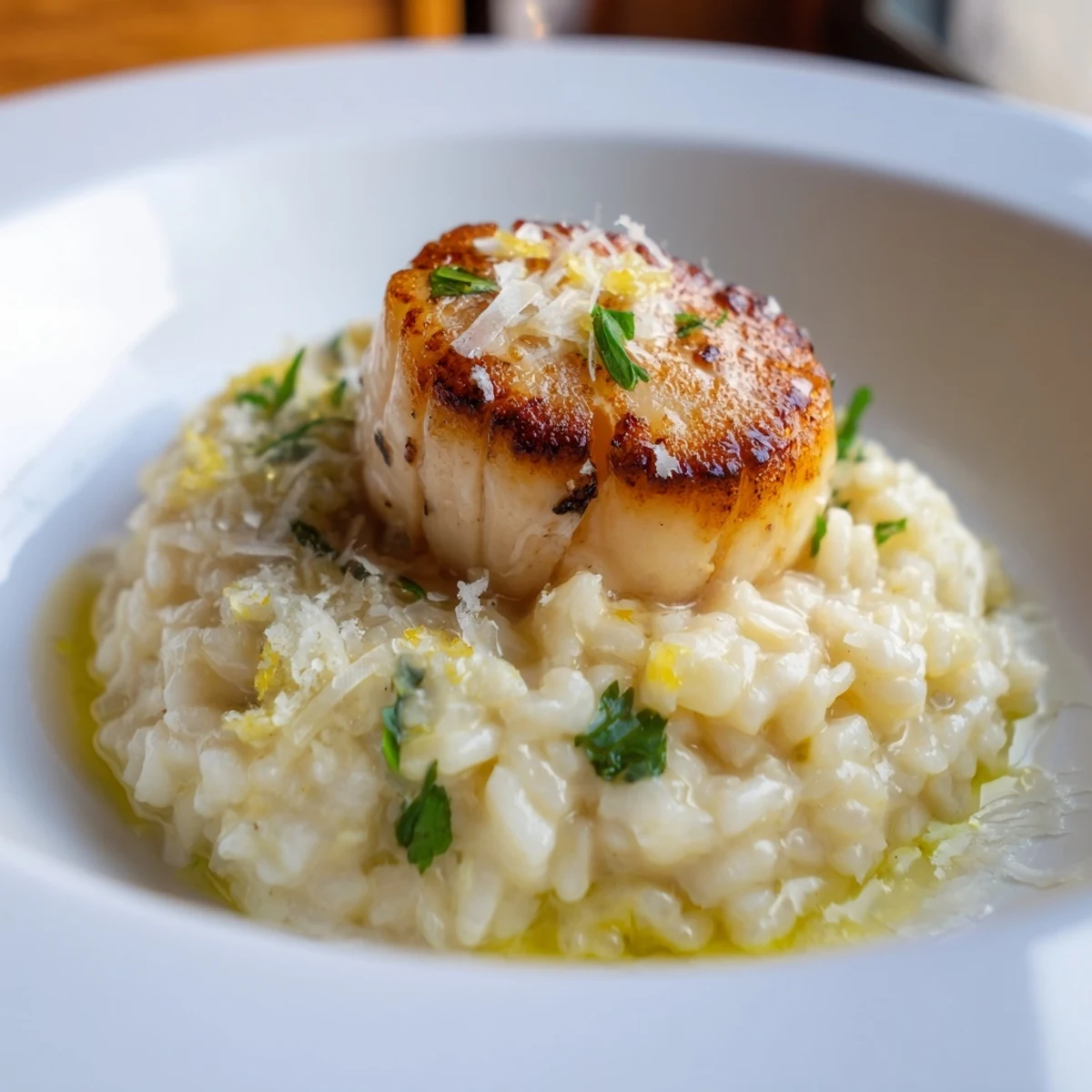
- Spoon a generous portion of creamy risotto into the center of each plate, then arrange the seared scallops on top. Drizzle the remaining lemon-garlic butter from the pan over everything, and finish with a light scatter of fresh parsley and extra lemon zest if you like.
 Save to Pinterest
 There's a moment, right at the end, when you plate this dish and look at it—the way the golden scallops catch the light, the way the risotto pools softly around them, that shimmer of lemon butter—and you realize that something simple and honest just became something memorable. That's the moment I remember why I cook.
The Art of Searing Scallops
Searing scallops is less about technique and more about respect: respect for the ingredient, respect for the heat, respect for timing. The pan needs to be hot enough that the scallop develops a golden, caramelized crust in two minutes—this isn't just about looks, it's about flavor. The Maillard reaction that creates that crust is where sweetness and depth come from. I used to worry about cooking them too long, but I've learned that two minutes per side is usually perfect, and overcooking slightly is less likely to happen than undercooking them raw in the middle. Listen for the sizzle, trust your instincts, and remember that scallops will continue cooking for a few seconds after you flip them.
Risotto: The Ritual of Stirring
Risotto has a reputation for being fussy, but I think that comes from misunderstanding what the stirring actually does. Each stir releases starch from the rice grains, and that starch is what creates the creamy texture—not cream, not butter, but the rice itself becoming something rich and luxurious. The constant attention also keeps the heat even and prevents sticking on the bottom of the pan. It's meditative, honestly; for twenty minutes, you're just standing there, stirring, tasting, adding broth, and watching something transform. That's the opposite of fussy—that's the opposite of rushed.
Wine Pairing and Make-Ahead Tips
Serve this with a crisp, bright white wine like Sauvignon Blanc or Pinot Grigio—something with acidity that echoes the lemon in the sauce and cleanses your palate between bites. For a make-ahead strategy, you can prepare the risotto about two-thirds of the way through, then finish it with the remaining broth and cheese just before serving; this takes pressure off if you're cooking for guests. The scallops, however, must be cooked at the last minute—they're at their best in the first few minutes after searing, when they're tender and the butter is still foaming.
- Save a handful of uncooked rice from your measured portion to test doneness by tasting a single grain—it should be creamy outside with a barely firm center.
- If your risotto seems too thick, a splash of warm broth or even warm water will loosen it without watering down the flavor.
- Buy scallops the day you plan to cook them, and ask the fishmonger if they've been treated with phosphates, which can make them rubbery.
 Save to Pinterest
 This dish proves that you don't need complicated techniques or an exhausting ingredient list to feel proud of what you've made. Sometimes the best meals come from respecting simple, good ingredients and giving them the attention they deserve.
Recipe Questions
- → How do I achieve a perfect sear on scallops?
-
Pat scallops completely dry before cooking to avoid steaming. Use a hot nonstick skillet with olive oil, and sear without moving for 2 minutes until golden on one side, then flip and cook briefly with butter and garlic.
- → What broth is best for creamy risotto?
-
Use warm low-sodium chicken or vegetable broth, adding it gradually to the Arborio rice while stirring gently for a creamy texture.
- → Can I substitute the scallops with another seafood?
-
Yes, shrimp can be used as a substitute. Adjust cooking times accordingly to ensure they remain tender and juicy.
- → How do I make the risotto extra creamy?
-
Stir in heavy cream along with Parmesan cheese at the end of cooking for additional richness and creaminess.
- → What wine pairs well with this dish?
-
Crisp white wines like Sauvignon Blanc or Pinot Grigio complement the lemon-garlic flavors and creamy risotto beautifully.