
 Save to Pinterest
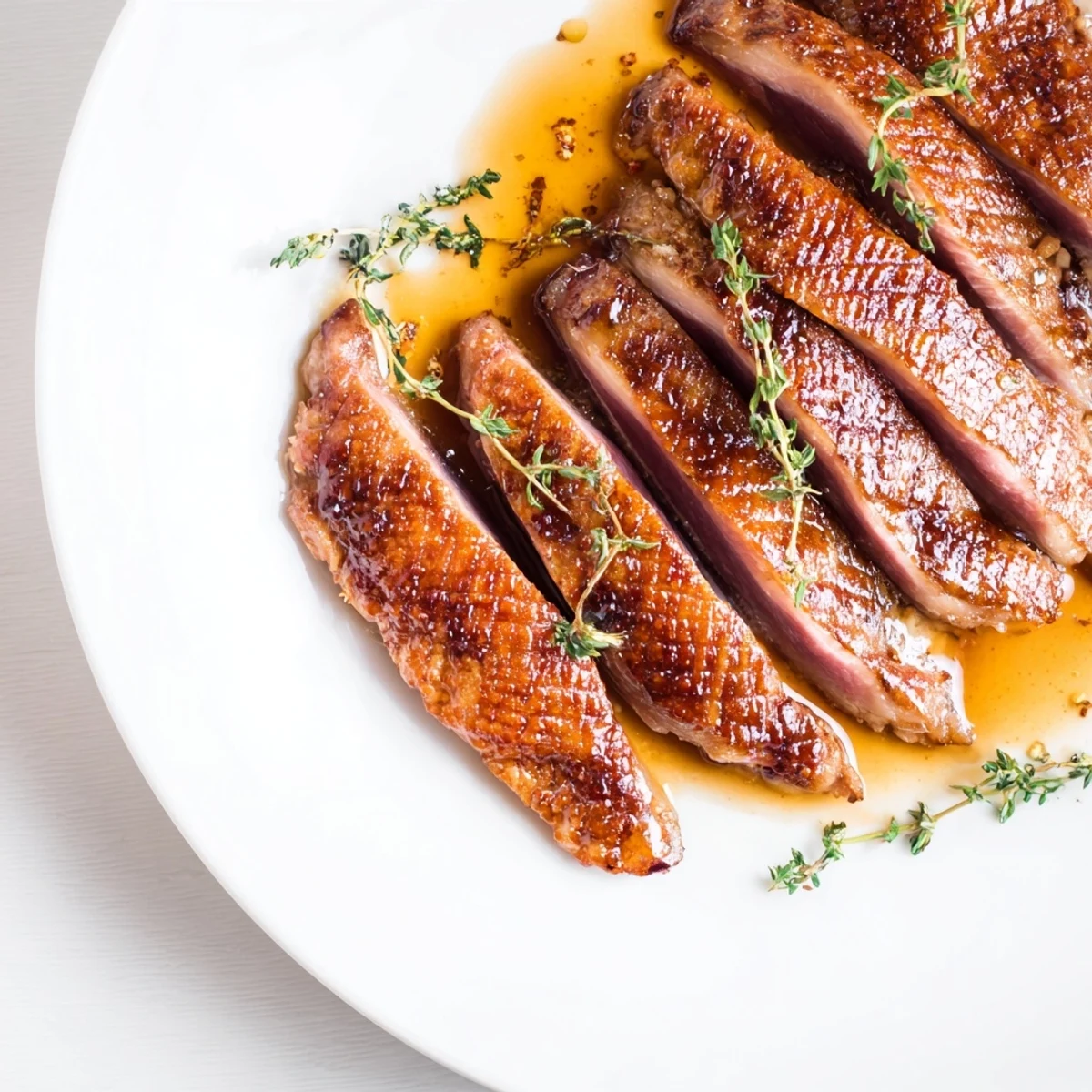
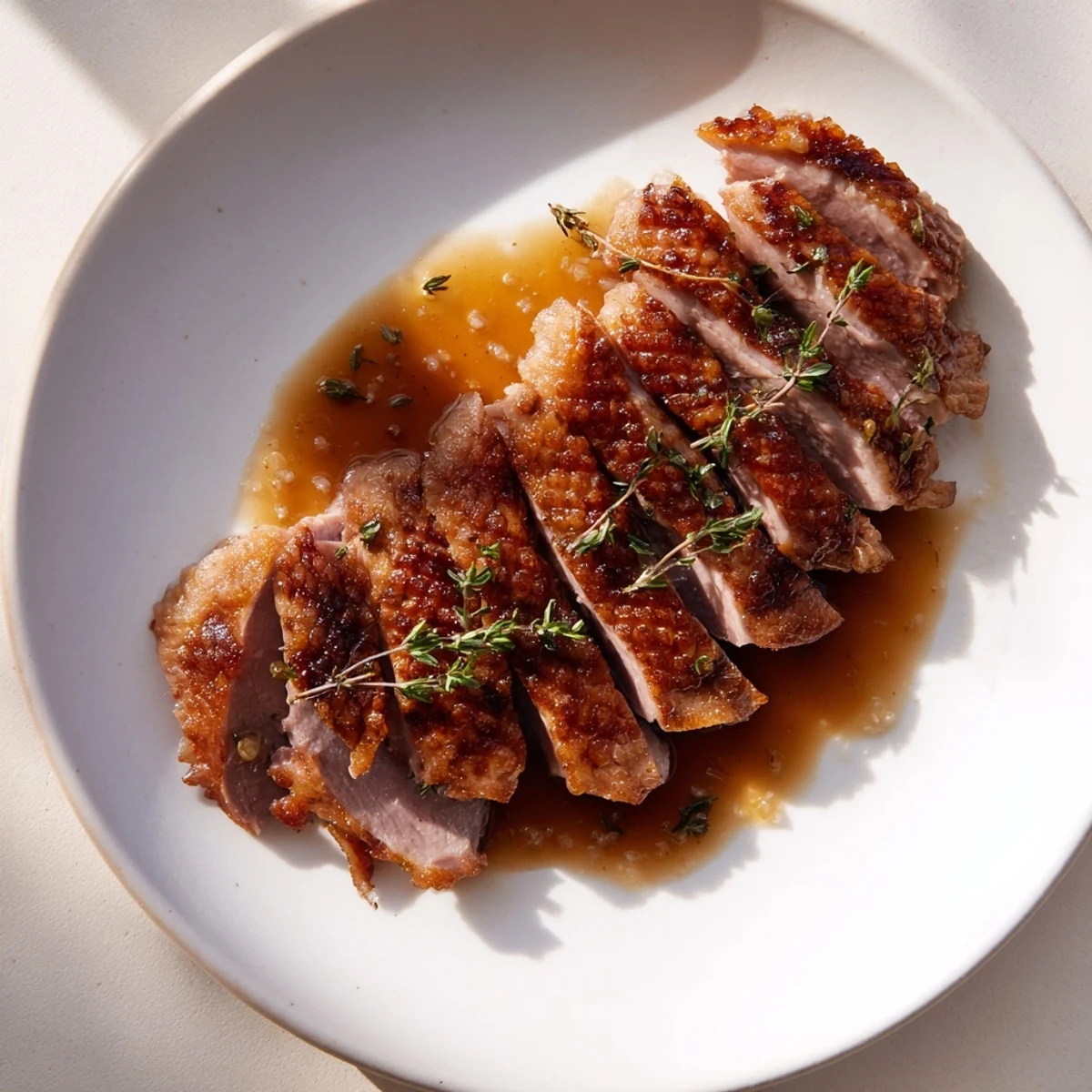
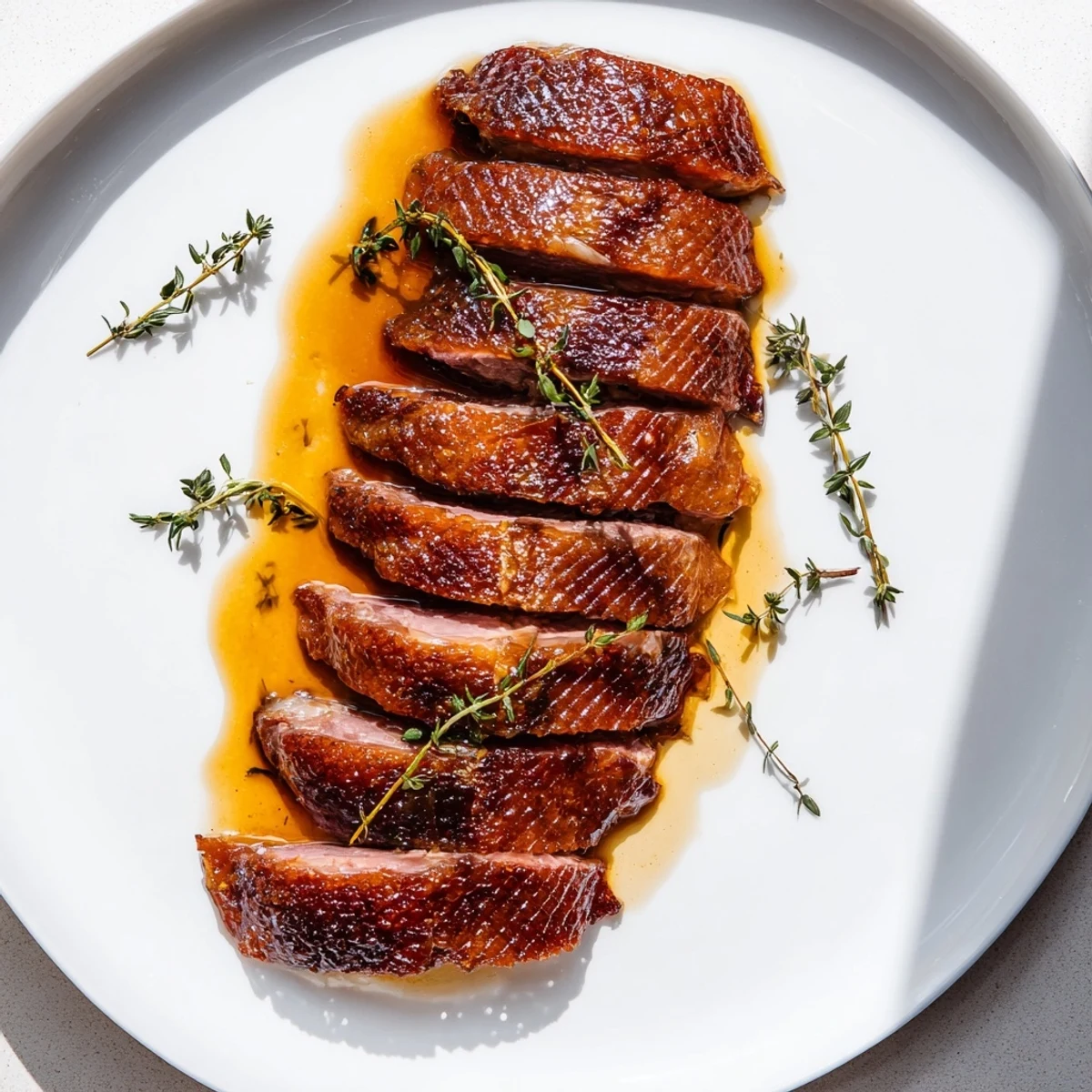
 This dish features tender duck breast, expertly pan-seared to achieve a golden, crispy skin. The technique involves scoring the skin, seasoning generously, and cooking over medium heat to render fat and crisp the skin. After resting, the meat is sliced and paired with a simple pan sauce made by deglazing with red wine, reduced with stock, and finished with butter and thyme. Ideal for elegant meals, it pairs wonderfully with roasted vegetables or greens.
The smell of duck fat crackling in a quiet kitchen is one of those rare things that stops you in your tracks. I burned my first duck breast because I panicked and flipped it too early, the skin still pale and rubbery. That mistake taught me patience, and now I start the pan cold and let the skin slowly render into something golden and shattering.
I made this for my partner on a rainy Tuesday when we both needed something to feel special without the fuss of reservations. We ate at the counter with mismatched forks, and the sauce pooled into the mashed potatoes in a way that made us both go quiet for a few bites. Sometimes the simplest dinners end up meaning the most.
Ingredients
- Boneless duck breasts, skin on: Look for plump breasts with thick, even skin since thats where all the magic happens, and dont skip patting them bone dry or the skin wont crisp properly.
- Salt and black pepper: Season more than you think you should because duck can handle it, and the skin needs enough salt to become truly addictive.
- Shallots: Their sweetness softens the wine and adds a gentle background hum that garlic would overpower.
- Dry red wine: Use something youd actually drink, nothing too tannic or sweet, since it concentrates fast and becomes the backbone of the sauce.
- Chicken or duck stock: Homemade is lovely, but a good quality store bought works fine as long as its not overly salty.
- Unsalted butter: This is what makes the sauce cling and shine, so dont skip it or try to swap for oil.
- Fresh thyme leaves: Optional but worth it for the earthy note that ties everything together without shouting.
Instructions
- Score and season the duck:
- Pat the breasts completely dry, then use a sharp knife to cut a crosshatch pattern into the skin without slicing into the meat. Season both sides with more salt and pepper than feels polite.
- Start in a cold pan:
- Lay the duck skin side down in a cold, dry skillet and turn the heat to medium. Let the fat render slowly for 6 to 8 minutes, spooning out excess fat as it pools, until the skin turns deep gold and crackling crisp.
- Flip and finish:
- Turn the breasts over and cook for 3 to 4 minutes for rosy medium rare. Pull them out, tent loosely with foil, and let them rest for 5 minutes while you make the sauce.
- Build the pan sauce:
- Pour off most of the fat, leaving about a tablespoon, then add the shallots and cook for a minute until soft. Splash in the wine and scrape up every brown bit stuck to the pan.
- Reduce and finish:
- Add the stock and thyme, simmer until the sauce reduces by half and tastes concentrated, then pull it off the heat and swirl in the butter until it melts into a silky gloss.
- Slice and serve:
- Cut the duck into thin slices against the grain and arrange on warm plates. Spoon the sauce over the top and serve immediately.
 Save to Pinterest
 The first time I served this to friends, one of them said it tasted like something you'd order without looking at the price. That stuck with me because duck always felt intimidating until I realized it just wants to be left alone to do its thing. Now its my go to when I want to feel capable in the kitchen.
Pairing Suggestions
Roasted fingerling potatoes cooked in the leftover duck fat are the obvious move, but wilted spinach or a tangle of bitter greens cut through the richness in a way that feels necessary. A cherry compote or even a smear of fig jam on the side brings a sweet sharpness that makes every bite feel balanced.
Variations Worth Trying
Swap the red wine for fresh orange juice and a splash of balsamic if you want something brighter and a little sweeter. You can also add a spoonful of whole grain mustard to the sauce at the end for a gentle kick that plays nicely with the thyme.
What to Do With Leftovers
Sliced cold duck is perfect in a salad with bitter greens, toasted walnuts, and a sharp vinaigrette. The rendered fat keeps in the fridge for weeks and turns any vegetable into something you will want to eat with your hands.
- Save the fat in a jar and use it for the crispiest hash browns youve ever made.
- Leftover duck reheats gently in a low oven, but its just as good at room temperature.
- The pan sauce can be made ahead and gently rewarmed with a splash of stock to loosen it.
 Save to Pinterest
 Duck is one of those ingredients that rewards you for paying attention, and once you nail the crispy skin, you will find yourself making it again and again. It never stops feeling a little bit special.
Recipe Questions
- → How do you achieve crispy skin on duck breast?
-
Score the skin in a crosshatch pattern and cook it skin-side down in a cold, dry skillet over medium heat. This renders the fat and crisps the skin evenly without burning.
- → What is the ideal cooking time for medium-rare duck breast?
-
Cook the duck skin-side down for 6–8 minutes until crisp, then flip and cook an additional 3–4 minutes for medium-rare doneness.
- → How is the pan sauce prepared?
-
After removing the duck, sauté minced shallots in the rendered fat, deglaze the pan with dry red wine, add stock and thyme, then reduce by half. Swirl in butter off heat to finish.
- → Can the red wine in the sauce be substituted?
-
Yes, orange juice can be used as a fruity substitute to add a different flavor profile to the sauce.
- → What sides complement pan seared duck breast?
-
Classic accompaniments include roasted potatoes, wilted greens, or a cherry compote to balance the rich flavors.