
 Save to Pinterest
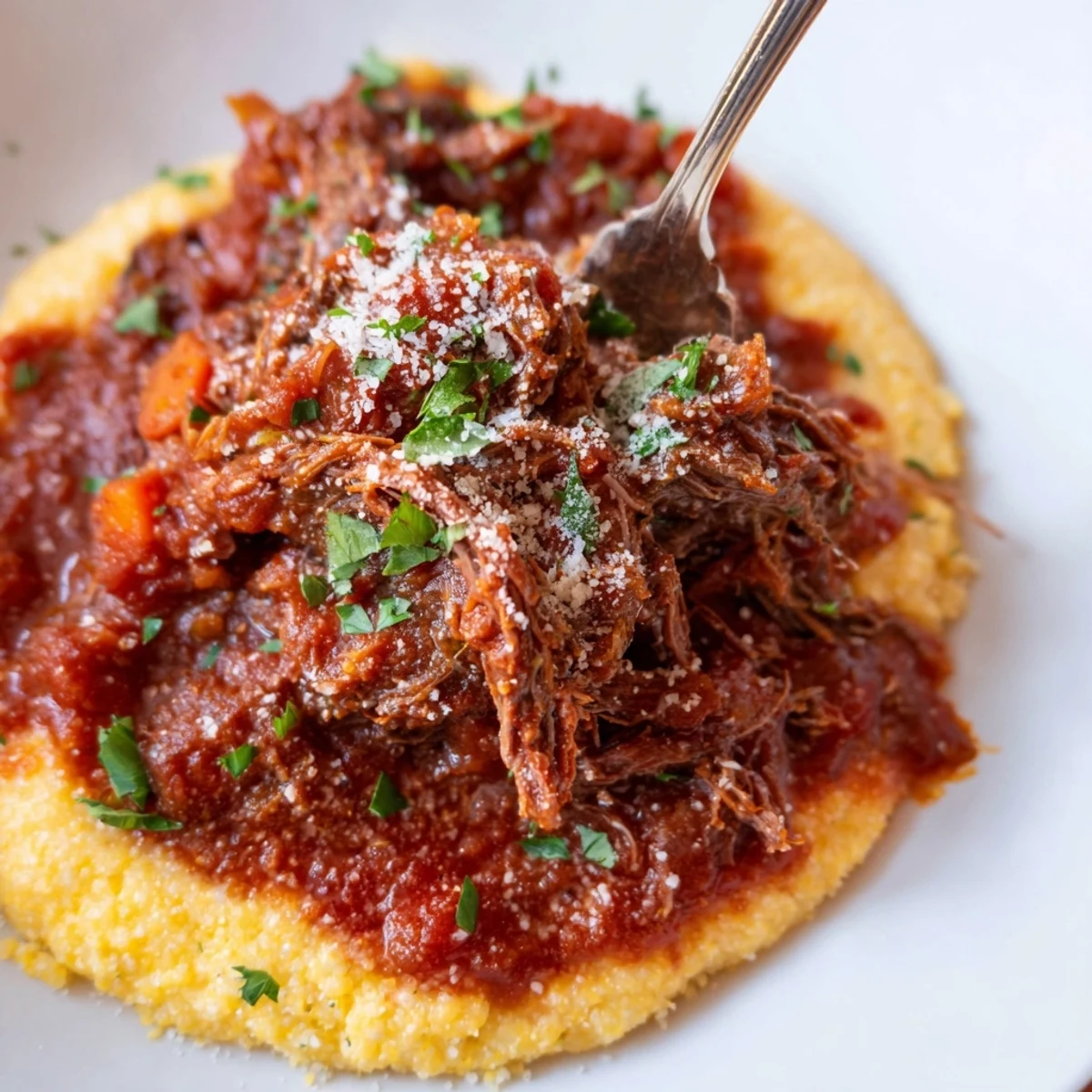
 This dish features beef chuck slowly simmered with aromatic vegetables, tomatoes, and herbs, developing a rich and savory sauce. It’s served over smooth and creamy polenta enriched with butter and Parmesan cheese for a comforting texture contrast. The combination delivers a warm, satisfying main dish perfect for family dinners, highlighting robust Italian flavors and slow-cooked tenderness.
There's something about opening the slow cooker eight hours later that never gets old—that cloud of steam carrying the scent of beef, wine, and tomatoes that's been quietly transforming in the background all day. I stumbled onto this ragu years ago when I had nothing but time and a chuck roast that needed redemption, and what emerged was this silky, deep sauce that made me understand why Italian cooks guard their slow-cooking secrets. Served over polenta that's been stirred to creamy perfection, it's become the dish I reach for when I want something that tastes like it took all day, because honestly, it did.
I remember serving this to a friend who'd been skeptical about polenta, thinking it sounded too heavy, and watching her reaction when she realized she could taste every layer of flavor—the wine, the herbs, the way the meat had given everything to the sauce. She came back specifically asking if I'd make it again, which is when I knew this wasn't just comfort food; it was the kind of dish that converts people.
Ingredients
- Beef chuck roast, 2 lbs, cut into large chunks: Chuck is forgiving during long cooking and breaks down into tender strands; cut the pieces chunky so they don't disappear into the sauce.
- Onion, 1 large, finely chopped: The foundation that softens into the background, building sweetness without any sharp edges.
- Garlic cloves, 3, minced: Added after the softer vegetables so it stays bright instead of turning bitter during those long hours.
- Carrots and celery, 2 of each, diced: The holy trinity's quiet partners; they dissolve slightly and add a subtle sweetness that rounds out the acidity.
- Crushed tomatoes, 1 can (28 oz): Use the unseasoned kind so you control the salt; canned tomatoes hold their acid better than fresh through the long cook.
- Tomato paste, 2 tbsp: Concentrate it slightly in the pan before adding to deepen the color and flavor without adding liquid.
- Beef broth and red wine, 1 cup and 1/2 cup: The wine adds complexity that mellows into the background; the broth keeps everything from becoming too thick.
- Dried oregano and thyme, 2 tsp and 1 tsp: Dried herbs hold up to the long cook better than fresh; add them early so they fully hydrate.
- Bay leaves, 2: Fish them out at the end or you'll get a mouthful of pine—they're there for the whisper of their presence, not the shout.
- Red pepper flakes, 1/2 tsp (optional): Just enough to make you notice there's warmth underneath all that richness.
- Coarse cornmeal (polenta), 1 1/2 cups: Buy the real thing, not instant; it has a better texture and doesn't taste like it came from a box.
- Water or chicken broth for polenta, 6 cups: Broth adds flavor, but water lets the Parmesan shine if that's all you have.
- Butter and Parmesan, 2 tbsp and 1/2 cup: These arrive at the very end to give the polenta that luxurious creaminess that makes people forget it's just cornmeal.
Instructions
- Sear the beef until golden on all sides:
- Heat the oil until it shimmers, then work in batches so you're not crowding the pan; you want a proper brown crust, not steam. This takes about ten minutes total and is the one non-negotiable step that adds real depth.
- Build the soffritto base:
- In the same hot pan, the vegetables pick up all those caramelized bits from the beef; cook until the onion turns translucent and everything smells like the start of something good. Add garlic last and stir for barely a minute so it doesn't burn.
- Combine everything in the slow cooker:
- Stir the tomatoes, paste, broth, wine, and herbs together, nestling the beef into the mixture so it's mostly covered. The slow cooker's low, even heat is about to do the heavy lifting.
- Let time do the work:
- Eight hours on low transforms tough meat into something that yields to a fork; if you're in a hurry, four to five hours on high works, but you'll lose some of that deep, melded flavor. Don't peek too often—every time you open the lid, you're releasing heat and extending the cook.
- Shred the beef and adjust the flavor:
- The meat should fall apart with barely any pressure from two forks; taste the sauce and add salt, pepper, or a splash of wine if it needs brightness. Remove the bay leaves first or risk a surprising bite.
- Cook the polenta with patience:
- Bring the liquid to a boil, then whisk in the cornmeal in a slow stream so it doesn't lump; this is the one moment where attention matters. Reduce the heat and keep stirring every few minutes as it thickens, scraping the bottom and sides so nothing sticks and scorches.
- Finish polenta with butter and cheese:
- Stir in the butter and Parmesan at the very end so they melt into the creamy base without any grittiness. Taste and adjust the salt, remembering that Parmesan brings its own saltiness.
- Plate and serve with generosity:
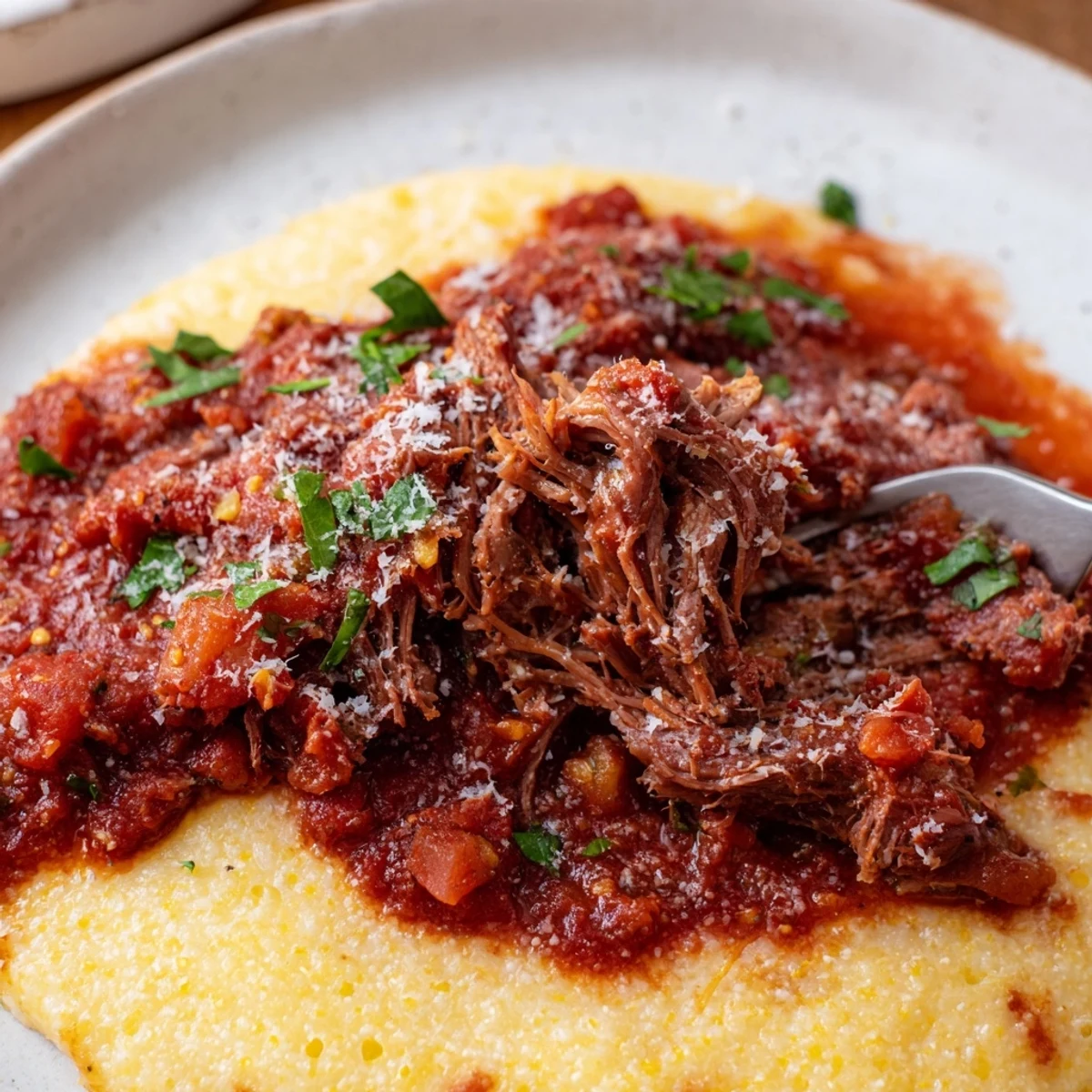
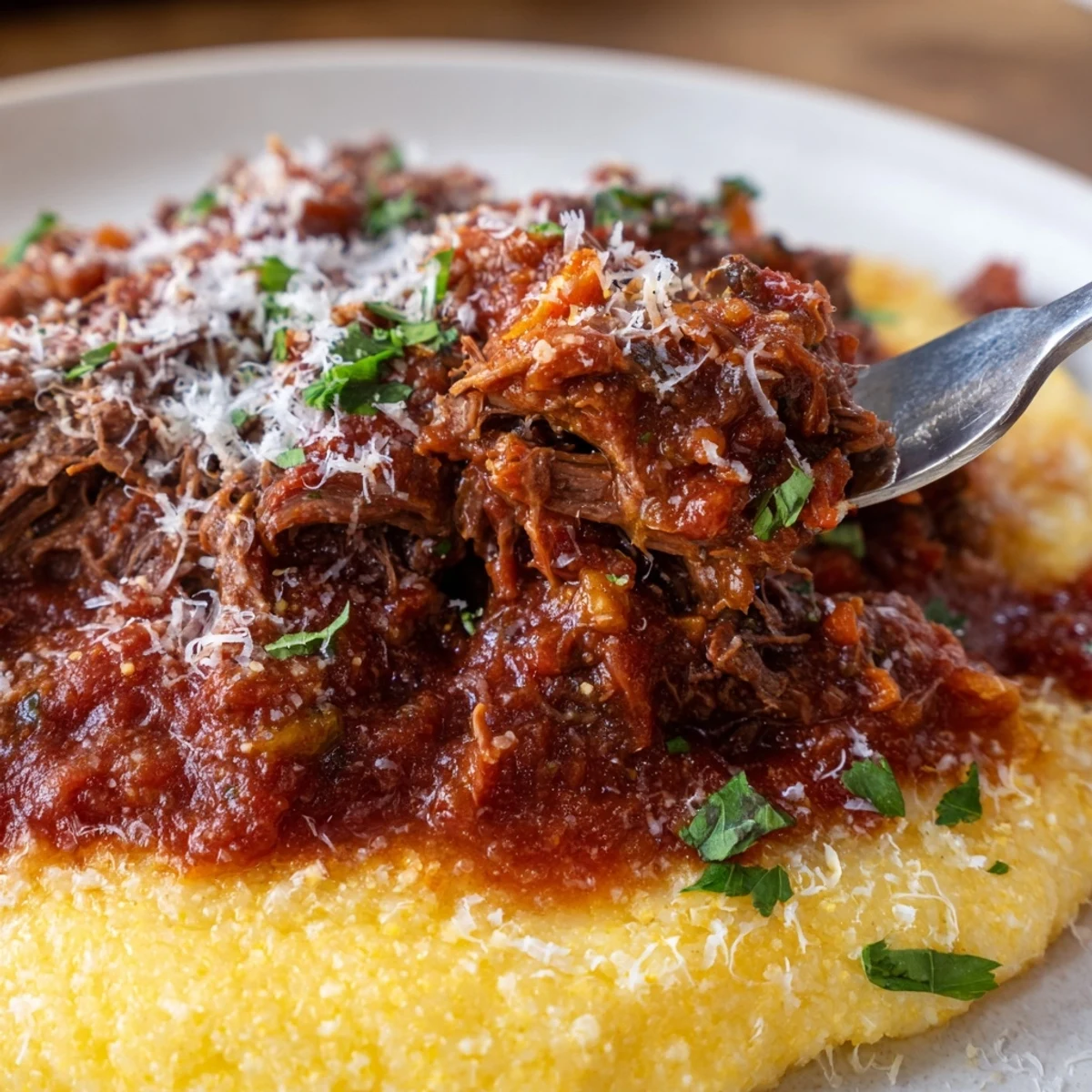
- A bed of creamy polenta, a generous ladle of ragu, and if you have it, a scatter of fresh basil or parsley to add a green note. Extra Parmesan on top is never wrong.
 Save to Pinterest
 One winter evening, I made this for a dinner party where everyone arrived skeptical of polenta, and by dessert, they were asking if they could scrape the bottom of the pot. That's when food stops being about technique and becomes about the moment—about how something that simmered quietly all day could bring people to the table and make them forget their phones even existed.
Building Depth Without Rushing
The slow cooker is honest; it won't let you fake a sear or skip the soffritto. What it does do is give you permission to step away, to let flavors marry on their own timeline instead of burning sauce on the bottom of a pot while you're trying to keep everything moving. The eight hours isn't a drawback—it's the whole point. Beef chuck, which is full of connective tissue and collagen, becomes almost gelatinous as it breaks down, creating that silky mouthfeel that makes people think you've been stirring for hours.
Polenta as a Canvas
Polenta gets a reputation for being finicky, but that's mostly because people rush it or ignore it while it thickens. The real secret is understanding that cornmeal is hungry for liquid and heat; feed it both slowly and steadily, and it transforms from gritty to creamy. I've learned to finish it with cold butter rather than melting it first—the cold butter creates these tiny pockets that make the polenta feel lighter, less like a starch and more like something you actually want to eat.
Making It Your Own
This ragu is a foundation, not a rule. I've added a splash of balsamic vinegar for deeper caramel notes, or a pinch of cinnamon when I want something that tastes almost sweet underneath the savory. Some nights I serve it over pasta instead, or let it cool and fry the polenta into crispy squares to top with cold ragu the next morning. The beauty of a slow cooker is that the base is forgiving—the technique stays the same, but the variations are endless.
- A splash of balsamic vinegar in the last hour adds a muted sweetness that rounds out acidity.
- Leftover ragu keeps for five days refrigerated and freezes beautifully for up to three months.
- Cold polenta can be sliced, fried in butter, and topped with ragu for a completely different meal.
 Save to Pinterest
 This dish taught me that some of the best meals happen when you stop trying to control everything and trust that time, heat, and honest ingredients will get you where you need to go. It's the kind of recipe that makes a kitchen smell like home.
Recipe Questions
- → Can I use a different cut of beef?
-
Yes, other cuts like brisket or short ribs work well but may affect cooking time and texture.
- → How can I make the polenta creamier?
-
Stir in extra butter and Parmesan cheese, and whisk frequently while cooking to avoid lumps.
- → Is it possible to prepare this without a slow cooker?
-
You can braise the beef on the stove or in the oven at low heat for several hours until tender.
- → Can I substitute red wine in the sauce?
-
Yes, beef broth or grape juice with a splash of vinegar can replace red wine without sacrificing flavor depth.
- → How should leftovers be stored?
-
Refrigerate in an airtight container for up to 3 days or freeze for longer storage. Reheat gently before serving.