
 Save to Pinterest
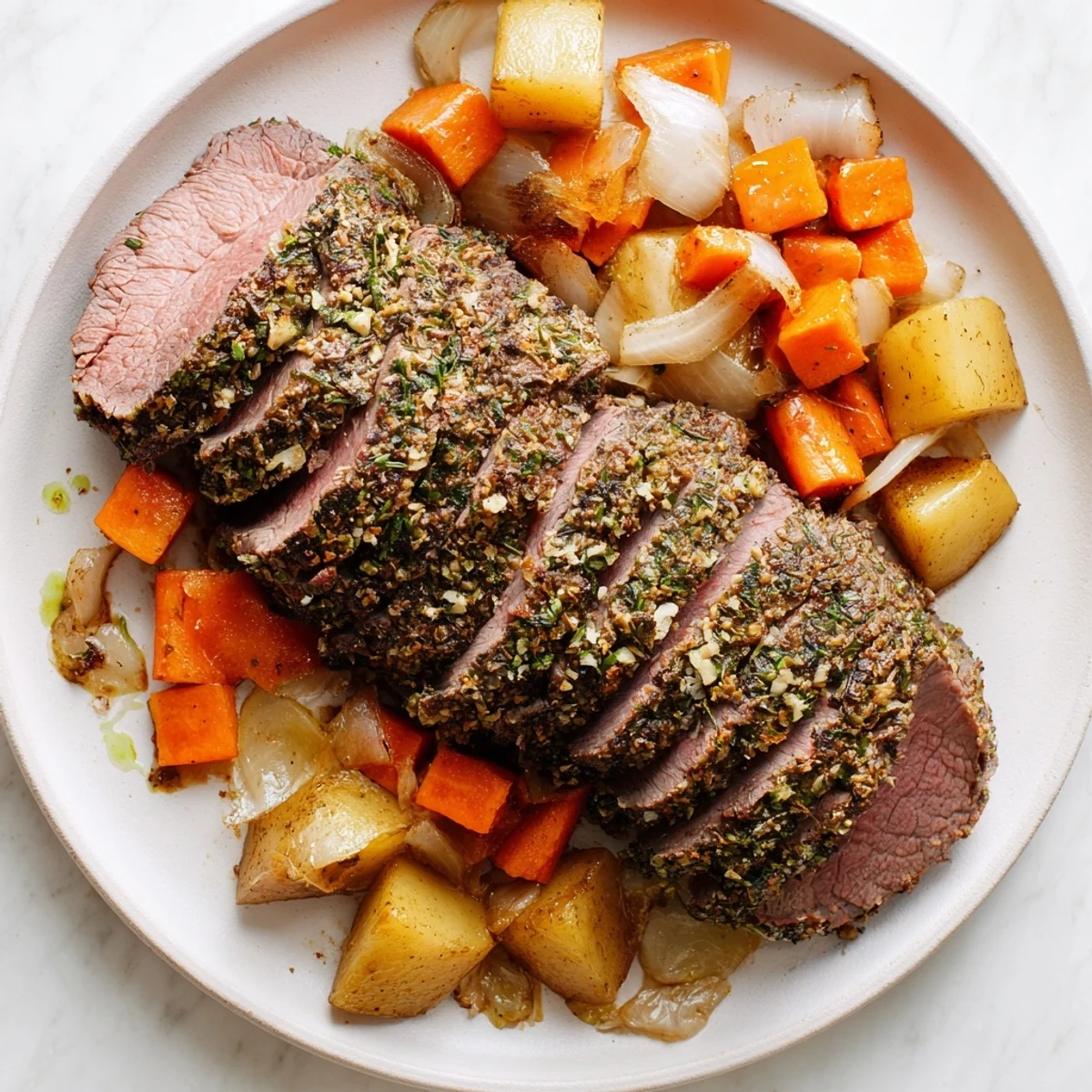
 This classic dish features a succulent beef sirloin generously coated with a fragrant blend of rosemary, thyme, garlic, salt, and pepper. Slow roasting at two temperatures ensures a juicy, tender result with a crisp herb crust. Paired with hearty roasted vegetables like carrots, onions, and potatoes, this main course balances rich flavors and satisfying textures. Resting the meat before slicing locks in juices for a perfect finish.
Ideal for special gatherings or comforting Sunday dinners, the simple seasoning highlights the natural beef taste, while optional sides add warmth and freshness. Cooking times and internal temperatures guide you toward medium or medium-rare doneness, helping achieve a melt-in-your-mouth experience.
My father taught me that roast beef isn't something you rush—it's a ritual that fills the house with the smell of rosemary and garlic long before anyone sits down. I was maybe twelve when he let me help rub the herb paste onto the meat, his hands guiding mine to make sure every surface got that golden crust. Now, whenever I make this, I'm standing in his kitchen again, watching the oven light glow warm and orange.
The first time I made this for my in-laws, I was nervous enough to check the meat thermometer seven times. My husband caught me doing it and just laughed, but when we sliced into that beef and it was perfect—pink and juicy with that crackling herb crust—something shifted. Suddenly I wasn't following a recipe; I was the person who knew how to do this.
Ingredients
- Beef sirloin or rib roast (1.5 kg): Room temperature is non-negotiable here; cold meat cooks unevenly and the outside dries out before the inside catches up.
- Olive oil (2 tbsp): Acts as the glue that holds the herb paste together and helps it brown gorgeously.
- Sea salt and black pepper: Don't skimp on either—the salt seasons the meat all the way through, and fresh pepper adds a quiet heat.
- Fresh rosemary and thyme (3 tbsp total): Dried herbs will betray you here; fresh herbs are where the magic happens, turning ordinary beef into something that smells like Sunday dinner.
- Garlic cloves (4, minced): These melt into the oil and create pockets of flavor throughout the crust.
- Carrots, onions, and potatoes: Optional only if you don't mind missing caramelized vegetables that taste like they absorbed the beef's essence.
Instructions
- Make your herb paste:
- Whisk the olive oil, salt, pepper, herbs, and garlic together in a small bowl until it looks like thick, fragrant mud. The smell alone will convince you this is going to be excellent.
- Prep the beef:
- Pat it completely dry with paper towels—any moisture is the enemy of a good crust. Let your hands feel the texture; you're getting it ready for transformation.
- Apply the crust:
- Rub the herb mixture all over the meat with confident hands, pressing gently so it adheres everywhere. Don't leave any patches bare.
- Set up the pan:
- Place the beef on a wire rack in a roasting pan, then arrange your vegetables around it if using them. The rack keeps the meat from stewing in its own juices.
- Start hot:
- :
- Roast at 220°C for exactly 20 minutes—this is when the crust forms and the exterior seals. You'll hear the sizzle change from aggressive to mellow.
- Finish gently:
- Lower the heat to 180°C and continue roasting for another hour (or until a meat thermometer reads 54°C for medium-rare). Check the thermometer only once or twice; opening the door lets heat escape.
- Rest and revive:
- Let the meat rest on a cutting board, tented with foil, for 15 minutes. This is when the juices redistribute and the meat becomes genuinely tender rather than just hot.
- Carve and serve:
- Slice thinly against the grain and serve with the pan juices poured over everything. The vegetables should be golden and tender enough to break with a spoon.
 Save to Pinterest
 There was a moment last Christmas when my daughter, who usually picks at her food, asked for a second slice before anyone else had finished their first. She wanted to know exactly how I made it taste like that. I realized then that this recipe had become something more than dinner—it was how my family marked time, how we said we cared enough to do something properly.
The Magic of a Perfect Crust
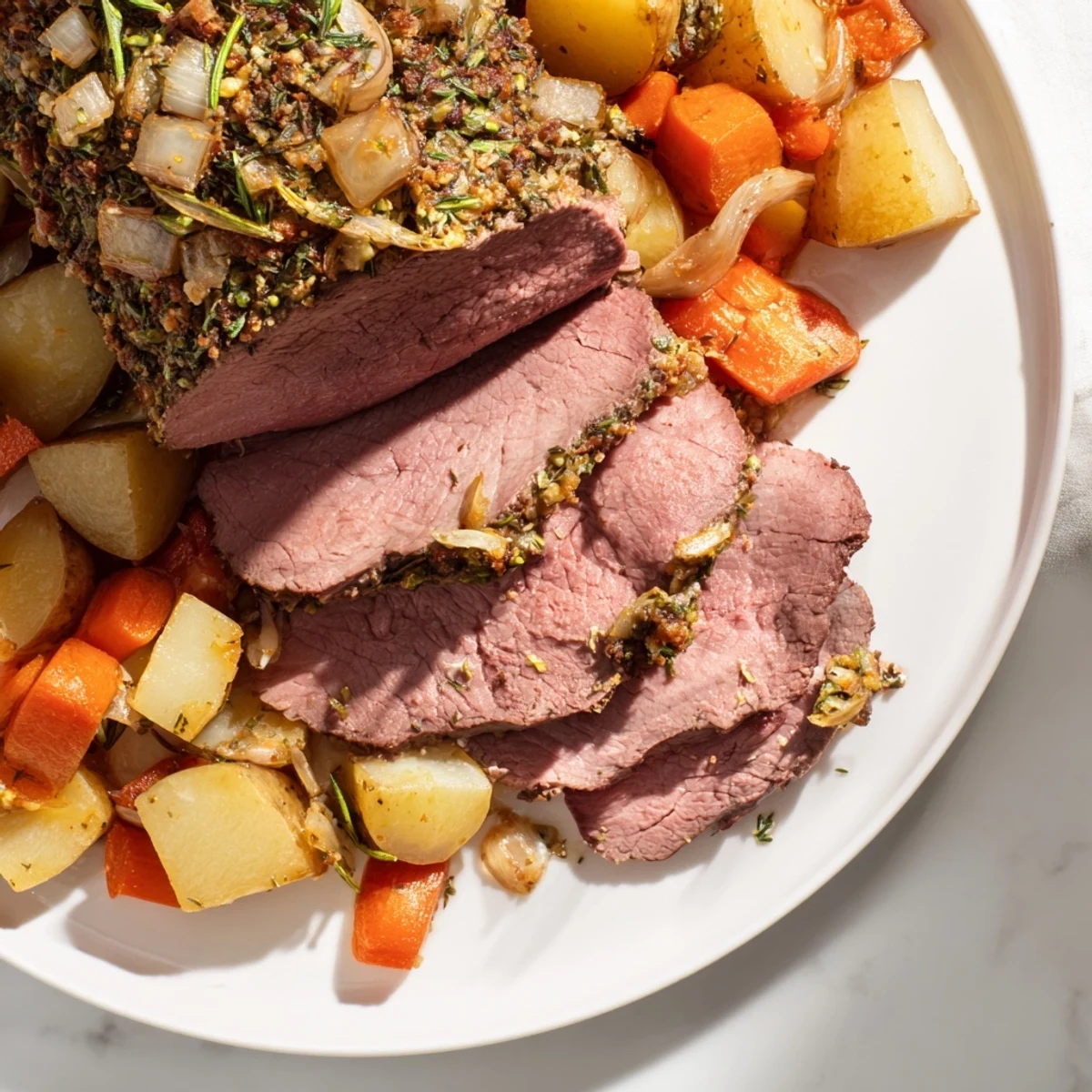
The herb crust is really everything here. It's not just seasoning; it's a protective layer that keeps the meat moist while creating this incredible textural contrast when you slice into it. The key is pressing that paste firmly onto dry meat and not disturbing it once it starts roasting. I learned this the hard way by opening the oven too early and watching my crust fall off like a shed skin.
Temperature Reading Isn't Cheating
I used to feel like using a meat thermometer was admitting defeat, like I wasn't a real cook unless I knew by intuition. Then I realized that every professional kitchen uses one, and the difference between medium-rare and medium-well beef is only a few degrees Celsius. Invest in a good thermometer and stop guessing.
Beyond Sunday Dinner
This roast has taught me that cooking for others is partly about technique but mostly about showing up and paying attention. The vegetables become almost as important as the meat—roasted in all those beef drippings until their edges caramelize and their centers turn silky. Nothing in this recipe is wasted, and neither is the effort.
- Leftover roast beef makes sandwiches that taste better on day two, especially with horseradish and a few cold roasted potatoes tucked between fresh bread.
- The pan juices can be chilled and reheated to serve warm over the sliced meat, or stirred into gravy for something even richer.
- If you have a Yorkshire pudding tradition in your family, this beef is its perfect partner—make them while the meat rests so everything arrives at the table warm.
 Save to Pinterest
 This is the kind of recipe that teaches you something every time you make it. Treat it as a conversation with the meat, the oven, and the people you're cooking for, and it will reward you.
Recipe Questions
- → How do I ensure the beef stays juicy?
-
Rest the meat for 15 minutes after roasting to allow juices to redistribute, keeping it moist and tender.
- → What herbs complement roast beef best?
-
Fresh rosemary and thyme work well, offering fragrant, earthy notes that enhance the beef's natural flavor.
- → Can I roast vegetables alongside the beef?
-
Yes, carrots, onions, and potatoes can be arranged around the beef for a flavorful, complete meal.
- → What internal temperature indicates medium-rare doneness?
-
Roast until the internal temperature reaches 54°C (130°F) for tender medium-rare beef.
- → Is a meat thermometer necessary for best results?
-
Using a meat thermometer helps achieve the desired doneness accurately and ensures food safety.