
 Save to Pinterest
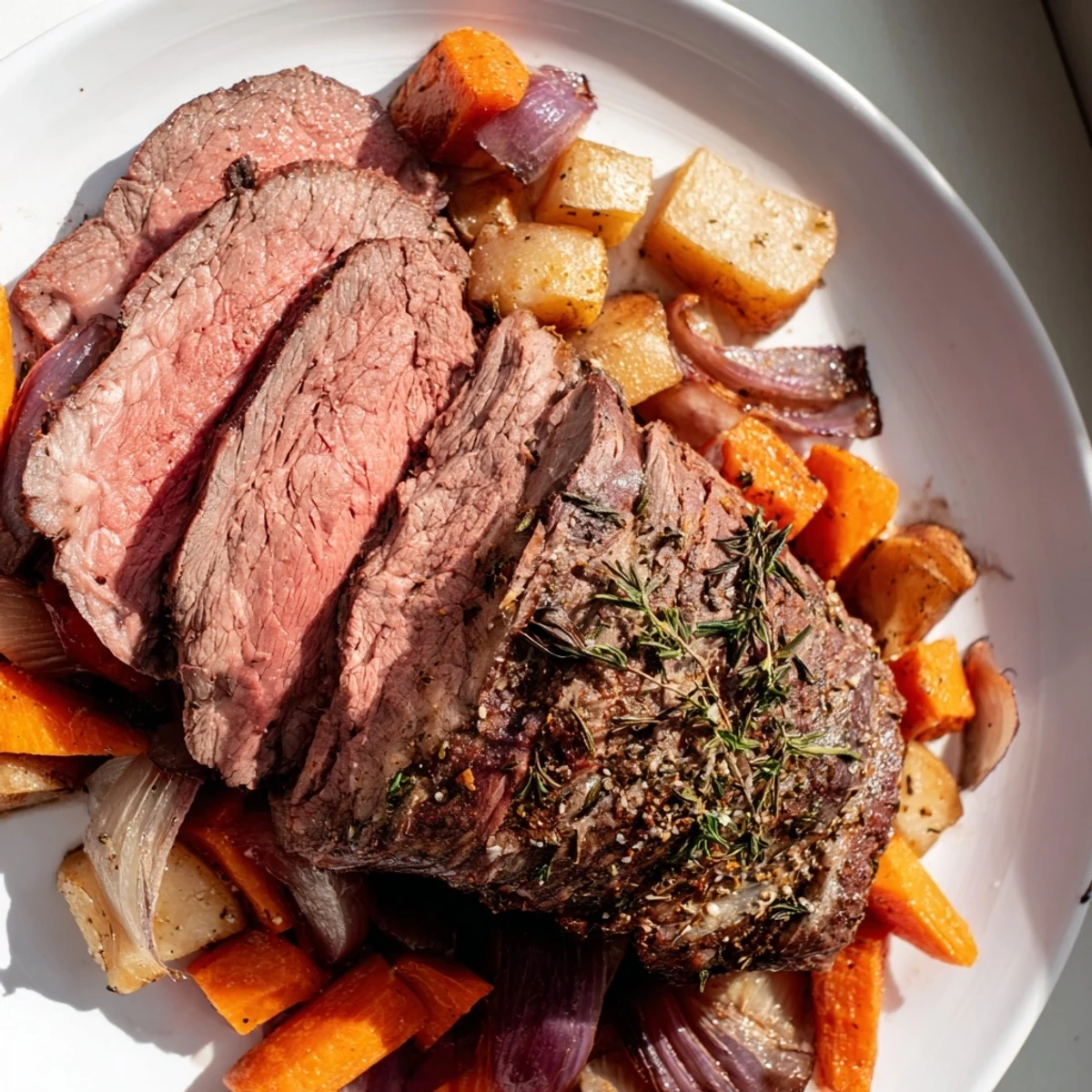
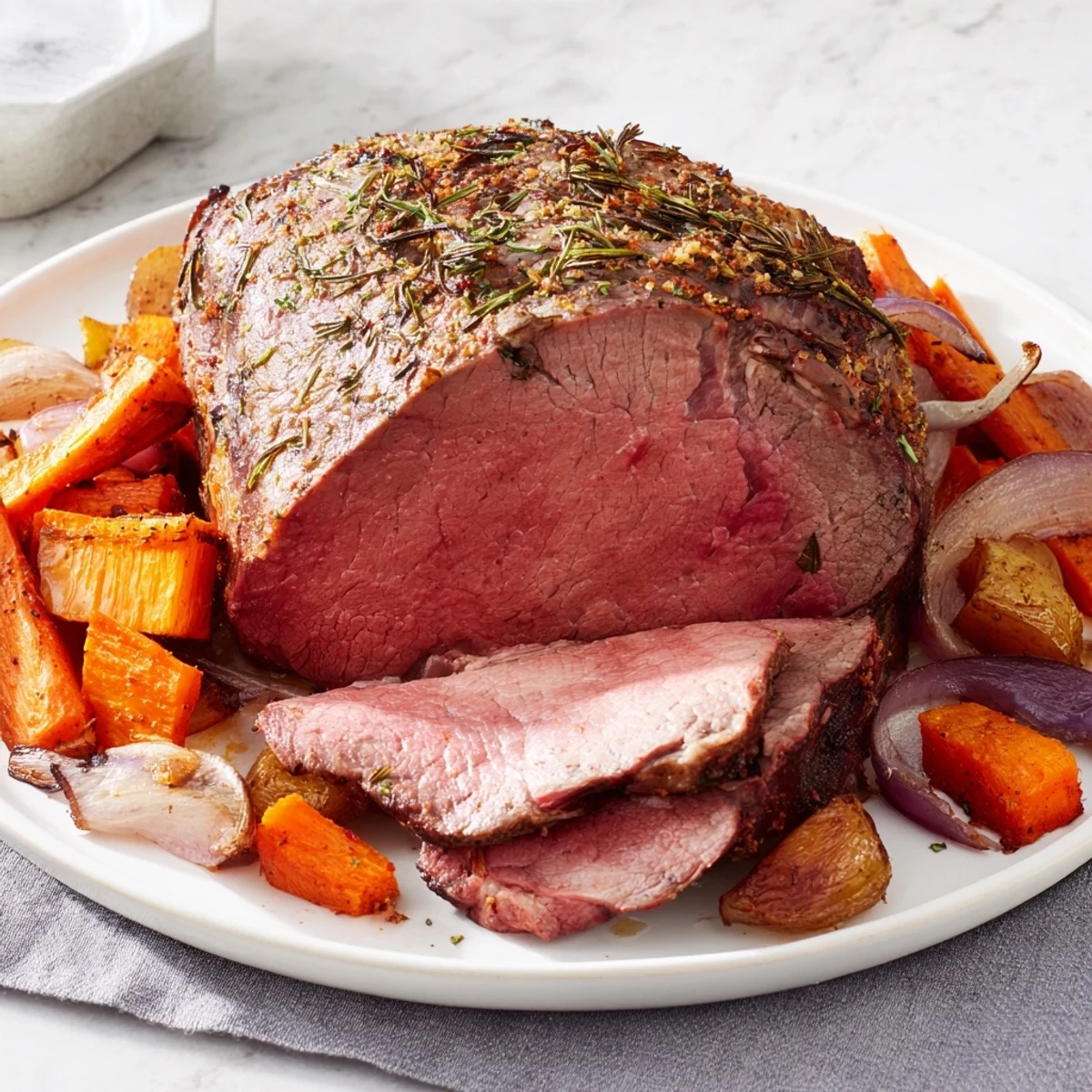
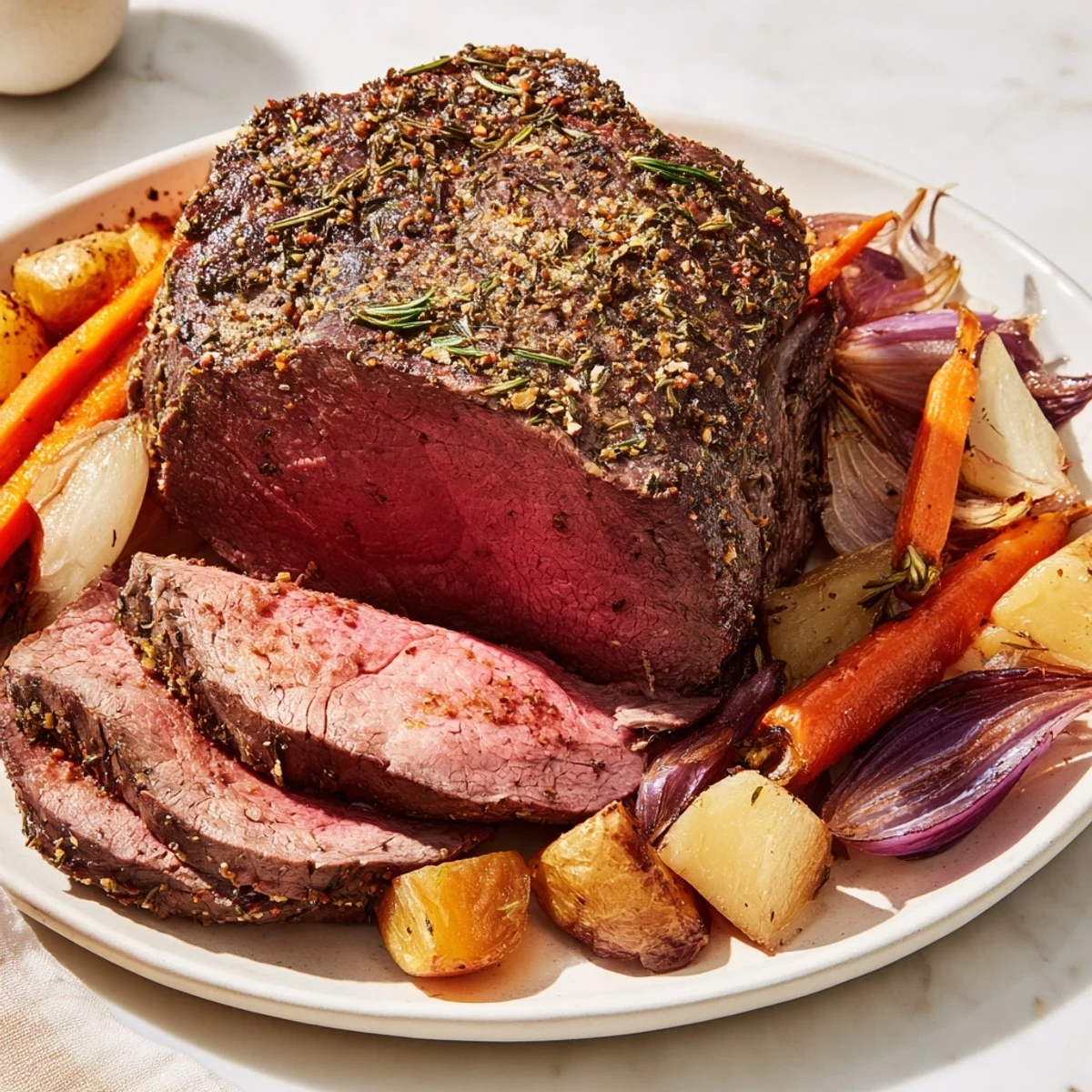
 This dish features a tender and juicy beef cut, seasoned with a fragrant blend of thyme, rosemary, garlic, salt, and pepper. Slow-roasted alongside hearty vegetables like carrots, onions, and potatoes, it creates a rich, flavorful meal ideal for family gatherings. Basting during cooking helps retain moisture, and resting the meat before slicing ensures maximum tenderness. Serve with pan juices or your choice of accompaniments to elevate the experience.
I still remember the first time I slow-roasted a beef roast for a family dinner, the house filling with the warm scents of thyme and rosemary made it feel like a special celebration without any fuss.
One unexpected evening when guests dropped by, this simple roast saved the day—while the oven did its magic, we shared stories and didn’t worry about timing or stress.
Ingredients
- Beef roast: I prefer sirloin for a good balance of tenderness and flavor but ribeye or rump work beautifully too
- Olive oil: A good quality one will bring out herbal flavors much better
- Herbs and spices: The dried thyme and rosemary add that classic aroma that makes this dish deeply comforting
- Garlic cloves: Minced fresh for a punch of savory depth
- Vegetables: Carrots, onions, and potatoes not only complement but cook with the meat for an all-in-one meal
- Beef stock: It keeps everything moist and adds richness to the pan juices you’ll love spooning over the slices
Instructions
- Get Everything Ready:
- Preheat your oven to 180°C (350°F) and gather all your ingredients so the process flows smoothly. The smell of fresh herbs and garlic mixing in the oil will have your mouth watering.
- Season the Meat:
- Mix olive oil, salt, pepper, thyme, rosemary, and minced garlic, then rub the blend all over the beef roast. The texture of the raw meat against your hands changes as it gets coated in the savory mix.
- Prepare the Roasting Tray:
- Layer the cut vegetables evenly in a large roasting pan to cradle the beef. Set the seasoned beef right on top—this layering lets the veggies soak up those amazing meat juices while roasting.
- Add the Stock:
- Pour the beef stock into the bottom of the pan; this keeps everything moist and creates a delicious base for basting and serving.
- Roast to Perfection:
- Place the pan in the oven for about 1 hour and 30 minutes, checking for doneness with a meat thermometer. Baste the roast once or twice with pan juices to lock in flavor and keep it tender.
- Let It Rest:
- Once done, remove the roast and cover it loosely with foil. This resting time redistributes the juices so every slice stays succulent.
- Serve and Enjoy:
- Slice the meat and serve it with the roasted vegetables and pan juices—comfort on a plate that tastes like home.
 Save to Pinterest
 This dish quickly became more than just food for me; it’s a marker of warm family dinners and those rare but treasured moments when the kitchen feels like the heart of the home.
Keeping It Fresh
Leftovers from this roast can be refrigerated for up to three days and still taste amazing when reheated gently; I like to slice thin and add to sandwiches or salads for a quick, satisfying meal.
Serving Ideas That Clicked
Serving this roast with a dollop of horseradish or a simple mustard sauce brightens up the rich flavors; pairing it with a crisp green salad balances the plate beautifully.
A Time This Recipe Saved the Day
Once during a busy holiday season, a last-minute dinner guest led me to pull out this roast—while it cooked, I managed holiday prep without stress knowing a great meal was almost ready.
- Don’t rush the resting step—even a few extra minutes matter
- If you forget the stock, water with a splash of soy sauce works in a pinch
- Lastly, save those pan juices—they’re pure gold for tasty gravies or to drizzle over mashed potatoes
 Save to Pinterest
 Thanks for hanging out in the kitchen with me, I hope this roast brings as much joy to your table as it has to mine over the years.
Recipe Questions
- → What cut of meat works best for slow roasting?
-
Beef cuts such as sirloin, ribeye, or rump are ideal for slow roasting due to their balance of tenderness and flavor.
- → How can I enhance the flavor before cooking?
-
Marinating the meat overnight with herbs and garlic allows deeper seasoning and richer taste.
- → Why is it important to baste the meat during roasting?
-
Basting with pan juices helps keep the meat moist and adds extra flavor throughout the roasting process.
- → What vegetables pair well when roasting with the meat?
-
Root vegetables like carrots, onions, and potatoes complement the dish and absorb savory juices.
- → How do I know when the meat is perfectly cooked?
-
Use a meat thermometer to check internal temperature; 60°C (140°F) yields medium-rare tenderness.
- → Can I substitute beef with other meats?
-
Pork or lamb can be substituted, adjusting cooking time to suit the chosen meat’s texture and size.