
 Save to Pinterest
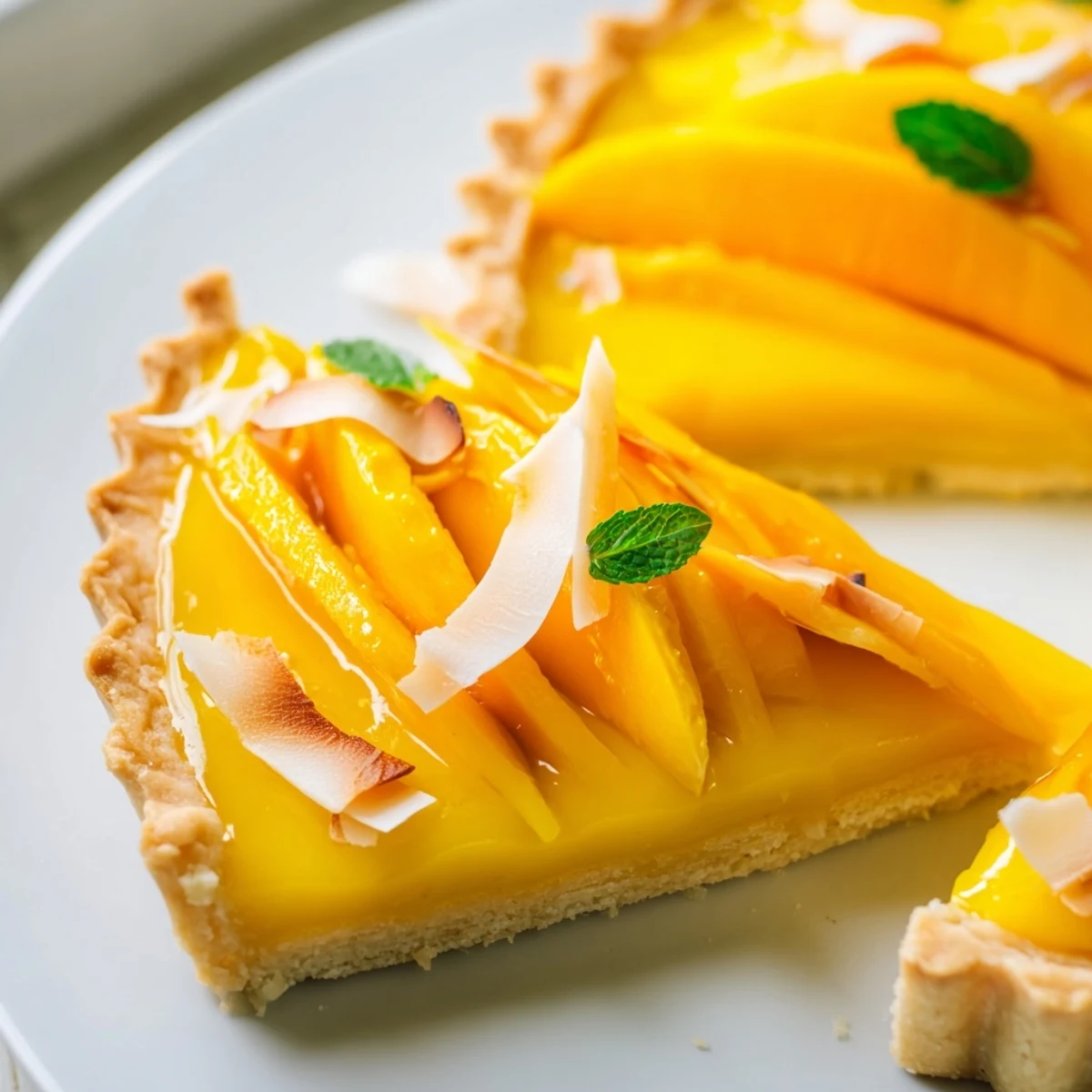
 This stunning tropical dessert features a crisp, buttery pastry shell filled with luscious mango curd. The golden crust provides the perfect contrast to the silky-smooth, tangy-sweet mango filling that captures the essence of summer. Each bite delivers buttery richness followed by bright tropical notes, balanced with a hint of fresh lime.
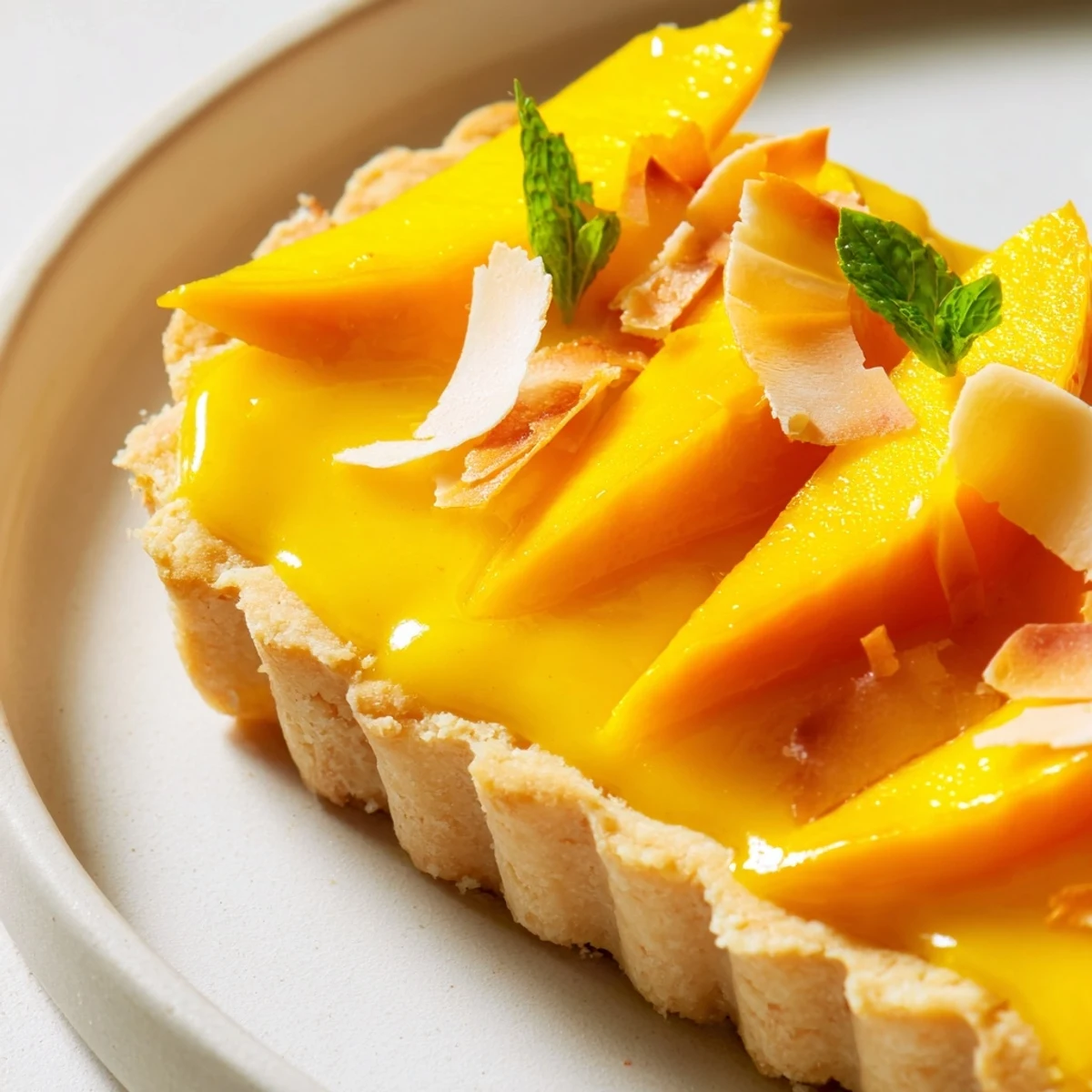
The process involves blind-baking the crust until golden, then preparing the curd by gently cooking fresh mango puree with eggs, sugar, and butter until thickened. After chilling to set, the tart emerges with a glossy, vibrant yellow surface that's beautiful on its own or decorated with fresh mango slices, toasted coconut, and mint.
The first time I made mango curd, I was eight years old and my kitchen ended up looking like a tropical storm had passed through. But that first taste of sunshine-yellow silk clinging to a spoon made every sticky counter worth it. Now this tart has become my go-to when I want to transport people to somewhere warmer without leaving their dining room. Something about mango and lime together feels like magic.
Last summer I made this for my sister's birthday dinner and watched my normally reserved father close his eyes after the first bite, completely silent for a full minute before declaring it better than anything he had in Hawaii. The beauty of this tart is how it manages to taste both elegant and comforting, like something you would find in a patisserie but with the soul of a homemade pudding.
Ingredients
- 1 1/4 cups (160 g) all-purpose flour: This forms the foundation of your crust and I have learned that measuring by weight rather than volume prevents the dreaded too-doughy disaster
- 1/2 cup (60 g) powdered sugar: Powdered sugar dissolves more readily than granulated, giving you that tender shortbread texture that makes tart crusts so irresistible
- 1/2 cup (115 g) unsalted butter, cold and cubed: Keep this ice-cold and work quickly to maintain those precious butter pockets that create flaky layers
- 1 large egg yolk: The fat in the yolk enriches the dough while keeping it pliable and easier to work with than whole egg alone
- 1–2 tbsp cold water: Add this gradually because too much will make your crust tough, while too little leaves you with a frustratingly crumbly mess
- 1/4 tsp salt: Just enough to wake up all the flavors without making your dessert taste like the ocean
- 1 cup (250 ml) mango puree: Fresh mango blitzed until completely smooth gives the brightest flavor, though good quality canned works in a pinch
- 2 large eggs: These provide structure to the curd and help it set into that gorgeous sliceable consistency
- 2 large egg yolks: Extra yolks mean extra richness and that velvety mouthfeel that separates good curd from great curd
- 1/2 cup (100 g) granulated sugar: This balances the natural acidity of the mango and lime without overpowering their delicate flavors
- 2 tbsp fresh lime juice: The secret weapon that cuts through the richness and makes the mango flavor sing instead of becoming cloying
- 1/4 cup (60 g) unsalted butter, cubed: Stirred in at the end, this transforms your cooked mixture from custard into silky, luxurious curd
- Fresh mango slices: These are not just decoration but a promise of what lies inside, and I always arrange them in overlapping circles for maximum effect
- Toasted coconut flakes: The contrast of warm, nutty coconut against cool, creamy mango is absolutely worth the extra five minutes
- Mint leaves: Tuck these here and there for a pop of color and a refreshing aroma that greets everyone before they even take a bite
Instructions
- Prepare the tart crust:
- Pulse flour, powdered sugar, and salt in a food processor until combined, then add cold butter and pulse until the mixture looks like coarse breadcrumbs with some pea-sized pieces remaining. Add egg yolk and one tablespoon of cold water, pulsing briefly until the dough just begins to clump together, adding the second tablespoon only if necessary. Gather the dough into a disk, wrap it tightly, and let it rest in the refrigerator for at least one hour because this relaxes the gluten and prevents shrinking during baking.
- Roll and chill the shell:
- On a lightly floured surface, roll out your chilled dough until it is about 1/8 inch thick, rotating frequently to prevent sticking. Carefully transfer the dough to a 9-inch tart pan, pressing it gently into the corners and trimming any excess. Prick the base all over with a fork and return the shell to the refrigerator for 15 minutes while you preheat your oven to 350°F (175°C).
- Blind bake the crust:
- Line the chilled shell with parchment paper and fill it with pie weights or dried beans, which prevent the bottom from puffing up or the sides from slumping. Bake for 15 minutes, then carefully remove the weights and parchment and continue baking for another 10 minutes until the crust is golden brown and fragrant. Let it cool completely on a wire rack because pouring hot curd into a warm crust will give you a soggy bottom.
- Cook the mango curd:
- In a medium saucepan, whisk together mango puree, whole eggs, egg yolks, sugar, and lime juice until completely smooth. Place over medium-low heat and stir constantly with a heatproof spatula, making sure to scrape the corners and bottom of the pan, until the mixture thickens enough to coat the back of a spoon, about 10 minutes. You will know it is ready when bubbles appear around the edges and the mixture reaches about 170°F on an instant-read thermometer.
- Finish the curd:
- Remove the pan from heat and immediately whisk in the cubed butter, one piece at a time, until each addition disappears into the glossy mixture. Pour the curd through a fine mesh sieve into a clean bowl to catch any bits of cooked egg, pressing gently with the spatula to extract all the liquid. Let it cool for about 15 minutes, stirring occasionally to prevent a skin from forming.
- Assemble and chill the tart:
- Pour the slightly cooled curd into your completely cooled tart shell, smoothing the top with an offset spatula or the back of a spoon. Refrigerate for at least 1.5 hours, though I have found that giving it a full 3 hours makes it easier to slice neatly. The curd should feel firm to the touch and hold its shape when you gently shake the pan.
- Decorate before serving:
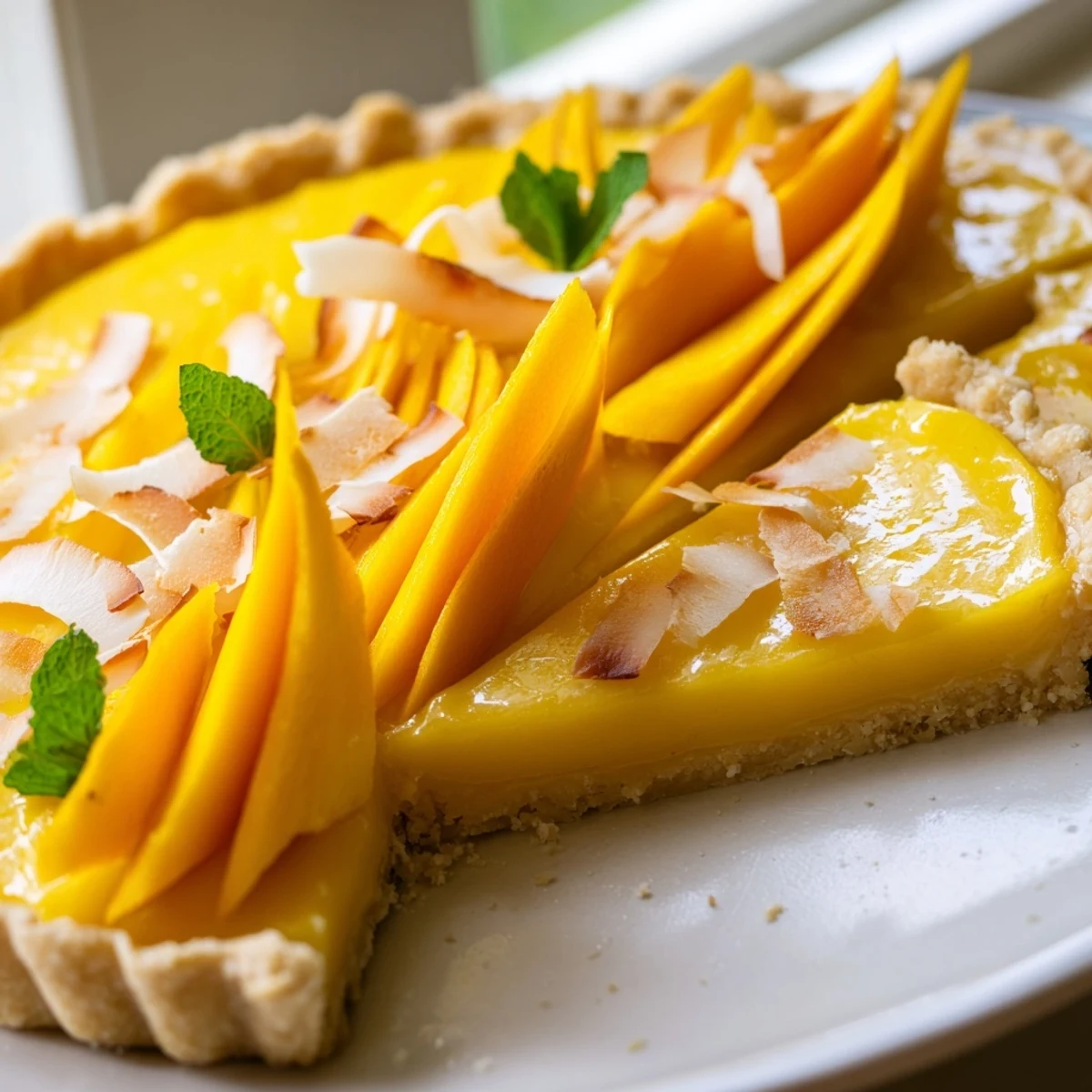
- Arrange fresh mango slices in concentric circles on top of the chilled curd, overlapping them slightly like flower petals. Scatter toasted coconut flakes in the spaces between mango pieces and tuck a few fresh mint leaves here and there for color contrast. Serve immediately or keep refrigerated until you are ready to impress your guests.
 Save to Pinterest
 This tart has become my signature dessert for summer dinner parties, and I love watching guests hesitantly take their first bite only to immediately ask for the recipe. Something about that combination of tropical sweetness and buttery, melting crust feels like a tiny vacation on a plate.
Making It Ahead
The tart actually improves after a day in the refrigerator, as the flavors have time to meld and the crust softens slightly from the moisture in the curd. I often bake the crust and prepare the curd a day in advance, keeping them separate until a few hours before serving to maintain that perfect texture contrast.
Serving Suggestions
While this tart is stunning on its own, I sometimes serve it with a dollop of lightly sweetened whipped cream flavored with a drop of vanilla extract. A small scoop of coconut sorbet on the side turns each bite into a tropical escape, and the slight temperature contrast makes the experience even more luxurious.
Perfect Presentation
The cleanest slices come from a sharp knife dipped in hot water and wiped dry between cuts. Serve the tart within an hour of decorating, as fresh mango can weep slightly and make the top look less pristine over time.
- Use a very sharp knife and gentle sawing motion to avoid dragging the curd
- Wipe the knife clean and dip in hot water between each slice for restaurant-quality results
- Bring the tart to room temperature for about 15 minutes before serving to let the flavors fully awaken
 Save to Pinterest
 There is something deeply satisfying about serving a dessert that looks as though it required professional training but came together in your own kitchen with a little patience and the right technique. Every time I pull this tart from the refrigerator, I remember that first sticky attempt and smile at how far I have come.
Recipe Questions
- → Can I use frozen mango puree instead of fresh?
-
Yes, frozen mango puree works perfectly for this tart. Thaw it completely and strain through a fine mesh sieve to remove any fibers or ice crystals before using. The texture and flavor will be just as delicious as fresh mango.
- → How long does mango curd tart last in the refrigerator?
-
The tart keeps well for 2-3 days when refrigerated in an airtight container or covered with plastic wrap. The crust may soften slightly over time, but the flavors remain vibrant. For best texture, serve within the first day or two.
- → Why did my mango curd turn out grainy?
-
Grainy curd usually results from overcooking the eggs or not straining the mixture. Always cook over medium-low heat while stirring constantly, and pass the finished curd through a fine mesh sieve. This step ensures perfectly smooth, silky texture.
- → Can I make this tart ahead of time for a party?
-
Absolutely! The tart can be made a day in advance. Prepare the crust and curd separately, then assemble and chill overnight. In fact, the flavors develop beautifully after several hours in the refrigerator. Add fresh decorations just before serving.
- → What can I use instead of a tart pan?
-
A 9-inch pie dish works as a substitute, though the sides will be thicker and less elegant. You can also use individual tartlet pans for charming single servings. For a rustic approach, press the dough into a square baking pan and cut into bars.
- → How do I know when the curd is thick enough?
-
The curd is ready when it coats the back of a wooden spoon and leaves a clear trail when you run your finger through it. This usually takes about 10 minutes of constant stirring. Remember that it will thicken further as it chills in the tart shell.