
 Save to Pinterest
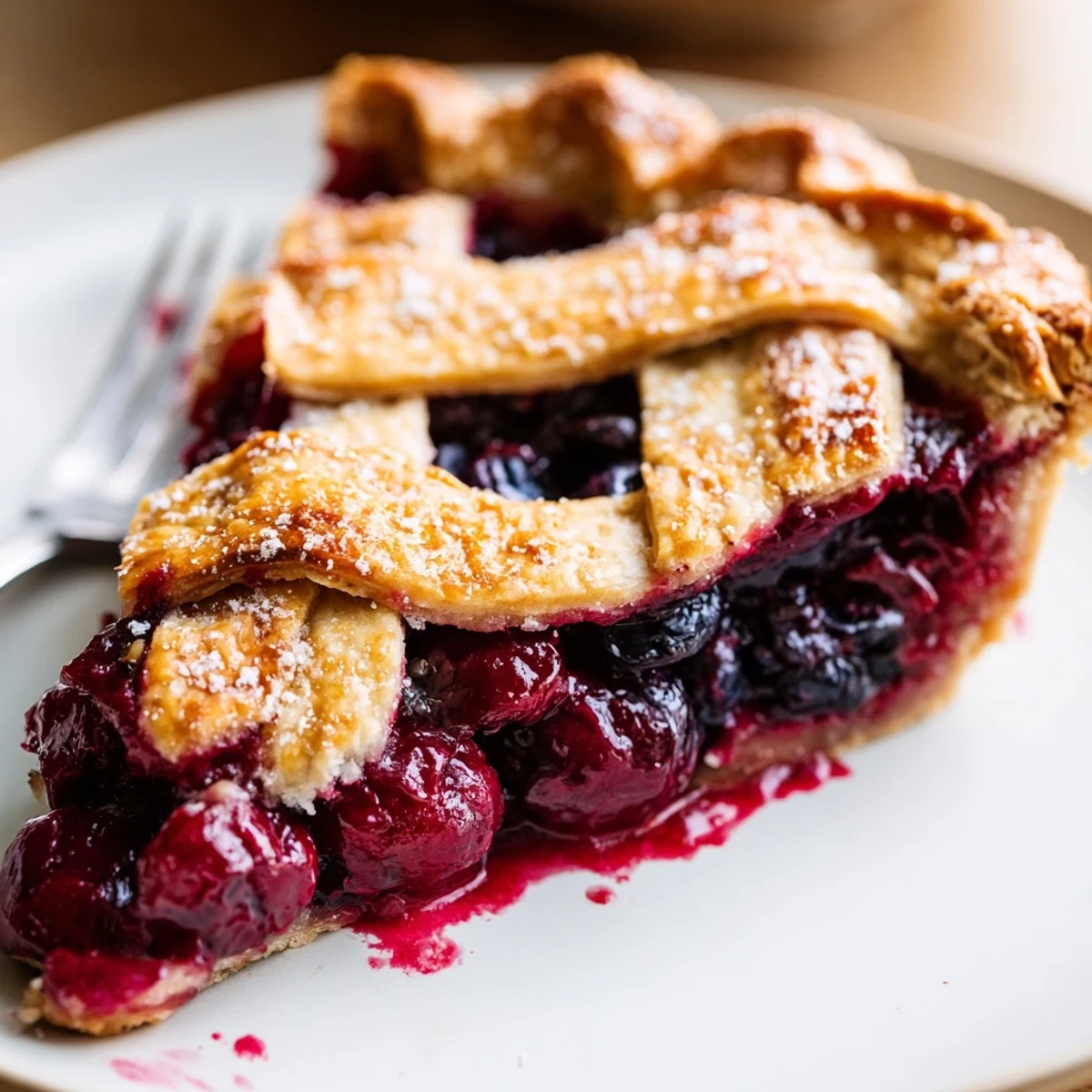
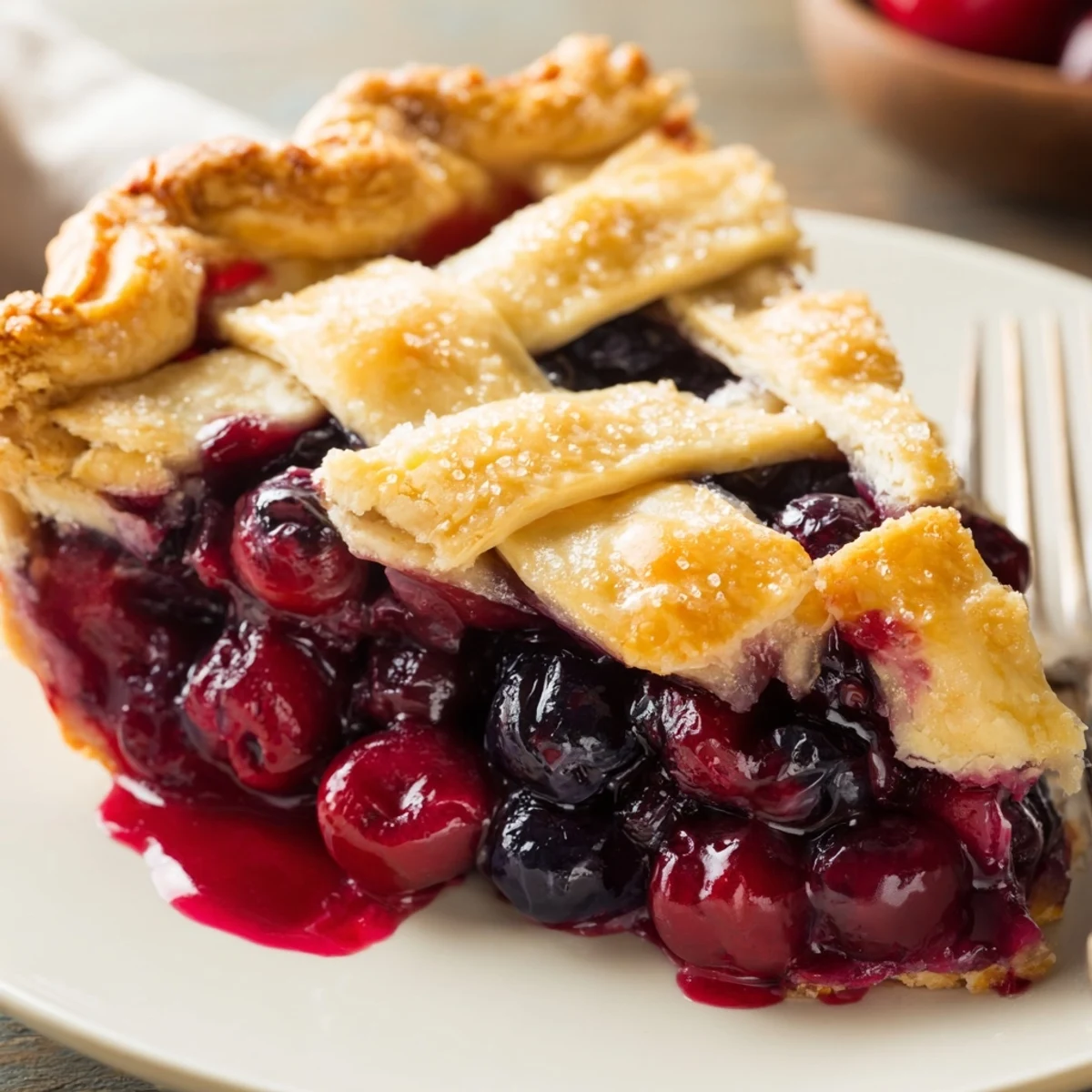
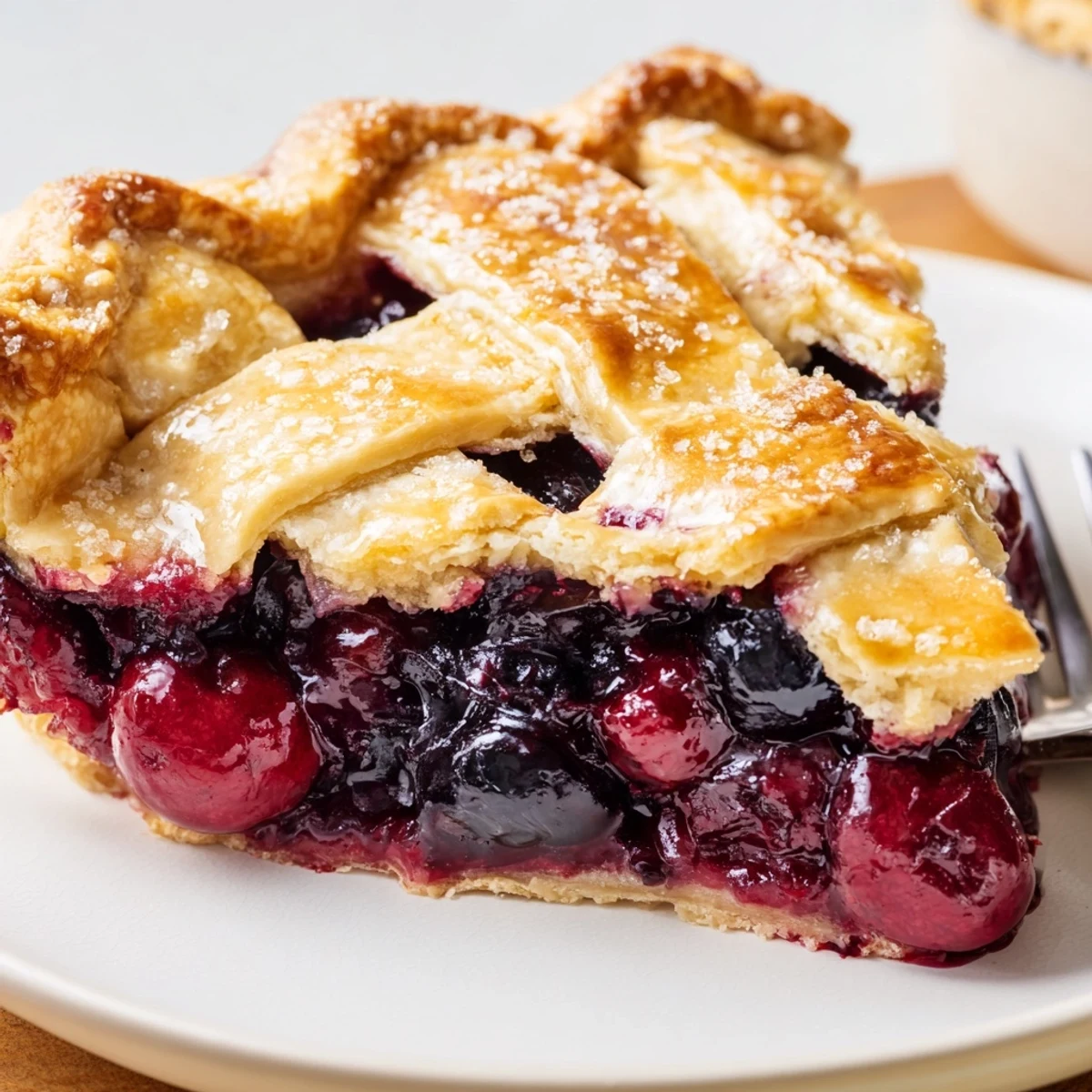
 This double-berry pie combines sweet cherries and plump blueberries tossed with sugar, cornstarch, lemon and vanilla, baked in a flaky, butter-rich crust. Chill dough before rolling, fill the case, top with a lattice or sealed crust, brush with egg wash and bake until golden and bubbling. Cool fully before slicing; serve warm with vanilla ice cream or whipped cream for contrast.
Sometimes you don’t realize you need a swing of bright summer flavor until you catch that first whiff of buttery pastry mingling with bubbling berries. The first time I made this cherry and blueberry pie, I was standing in a sun-warmed kitchen, and the colors alone felt like a celebration in a dish. The fruit tumbled everywhere—a few rogue berries nearly rolled under the fridge—and my hands were sticky with juice before I’d even preheated the oven. I always think of this pie as the edible sound of laughter on a midsummer afternoon: messy, sweet, and worth savoring.
This recipe made its true debut one Fourth of July, when my friend Sam insisted we host dessert on her porch. We took turns pinching the pie dough edges, giggling like kids, and arguing over whether to attempt a lattice or just slap the dough on top. Despite the blueberry juice that found its way onto my shorts, that pie got devoured before the sun even set. I can still picture the sticky plates balanced on armrests, faces smudged with berry stains, and the chorus of 'just one more slice.'
Ingredients
- All-purpose flour: A properly measured cup (spooned and leveled, never scooped) keeps the crust flaky rather than tough.
- Unsalted butter, cold and cubed: Cold butter is the secret to those buttery layers—don’t be afraid to chill your fingers or even your mixing bowl on a hot day.
- Salt: Just enough to balance out the sweetness and bring all the flavors to attention.
- Sugar: Both in the crust and filling, it coaxes out the berries’ juices while adding a subtle crunch to the edges.
- Ice water: Add it tablespoon by tablespoon—too much, and the crust toughens up; too little, and you can’t roll it out without cracking.
- Cherries and blueberries: I use a mix of sweet and tart cherries when I can, but even frozen fruit bakes up beautifully since it bursts with juices when heated.
- Cornstarch: The not-so-secret thickener that keeps your filling juicy, not soupy.
- Lemon juice: Don’t skip it; that bright acidity makes the berries taste even fruitier.
- Vanilla extract: Rounds out all that berry flavor with warmth (and hides any hint of freezer taste if you’re using frozen fruit).
- Cinnamon (optional): Adds sneaky depth—a little goes a long way.
- Egg and milk: A quick brush gives your crust a professional sheen and helps the sugar stick, which always gets compliments.
- Coarse sugar (optional): Sprinkled on top, it’s a little surprise crunch that makes the pie look like it came from a bakery window.
Instructions
- Make the pie crust:
- Work the flour, sugar, salt, and cold butter together in a bowl using your fingertips—the smell reminds me of rainy Saturdays. Add ice water, just a splash at a time, until the dough pulls together like damp sand—don’t panic if it looks messy. Divide, shape into discs, and chill while you prep the fruit.
- Preheat and prep:
- Turn on the oven to 400°F (200°C) so it’s ready when your pie is. The oven’s gentle hum is a promise of what’s to come.
- Mix the berry filling:
- In a big bowl, tumble cherries and blueberries with sugar, cornstarch, lemon juice, vanilla, cinnamon, and a pinch of salt. Let them mingle for ten minutes—the juice pools will tell you they’re ready.
- Roll and fill:
- On a floured counter, roll out one dough disc into a rough circle (don’t sweat uneven edges). Lay it in your pie dish and pour the fruit in, juices and all.
- Top and seal:
- Roll out the second dough disc and drape it over the pie—lattice if you’re feeling whimsical, a full crust if you’d rather tuck everything in. Crimp or pinch the edges, and don’t forget to vent with a few slits if you’re doing a solid top.
- Add the finishing touch:
- Beat the egg with milk, brush the crust, and sprinkle with coarse sugar if you have some—little details make it feel special.
- Bake the pie:
- Bake on the lower rack for 20 minutes, then drop the heat to 350°F (175°C) and give it 30 minutes more. The moment you see syrup bubbling up, the kitchen will smell like summer in technicolor.
- Cool and slice:
- The hardest part is waiting—let it cool so the filling sets, then cut generous wedges and serve (ice cream is highly recommended).
 Save to Pinterest
 There was one summer evening when this pie vanished before anyone even sat down—hands reached straight for the pan as soon as I set it on the table. The backyard was still warm, fireflies drifted by, and for a few happy minutes, the only sound was everyone fighting for the last buttery crust edge. That night, the empty pie dish was proof of how dessert can bring even a noisy group to silent delight.
My Take on Berry-to-Crust Ratios
I’ve learned that a mountain of fruit is tempting, but too much will overflow and swamp the crust. Right around four cups total is my happy spot—juicy but never runny, every bite getting both fruit and pastry. If you sneak a berry or two before baking, I won’t tell.
Making the Most of Your Pie Crust
Letting your dough rest really is the trick to easier rolling and fewer cracks. If the kitchen is hot, I sometimes pop the rolled crust into the freezer for a couple minutes—it helps with crispier layers and makes lifting it over the pie much less stressful.
Easy Ways to Serve and Store
Cooled pie cuts best, but if you’re in a hurry, a messy wedge with melting vanilla ice cream is never a bad thing. Wrap leftovers (if there are any) and keep them at room temp for a day or two, or refrigerate if it lasts longer—they’re delicious cold, right from the fridge.
- Let the pie sit for at least two hours before slicing to help the filling set.
- If using frozen fruit, don’t thaw—just toss and bake for easy cleanup.
- Leftover pie crust bits make great mini jam turnovers baked on the side.
 Save to Pinterest
 This pie tends to disappear fast, often before anyone even asks for seconds. May your kitchen be filled with laughter, purple-stained fingers, and not a crumb left in the pan.
Recipe Questions
- → How do I prevent a soggy bottom crust?
-
Toss the fruit with enough cornstarch and sugar to absorb extra juices, drain any thawed fruit well, and blind-bake or start at a high oven temperature to set the bottom crust before reducing heat.
- → Can I use frozen cherries and blueberries?
-
Yes. Thaw and drain frozen fruit, then toss with sugar and cornstarch. Slightly drier filling helps maintain a flaky crust and prevents excess steaming while baking.
- → What creates the best texture for the crust?
-
Use cold butter cut into coarse crumbs, minimal ice water to bring the dough together, and chill the discs for at least an hour. Keep the dough cold while rolling to ensure a tender, flaky crust.
- → How can I make a neat lattice top?
-
Roll the top disc evenly, cut strips of equal width, chill the strips briefly, then weave over the filled case. Use a sharp knife or pastry wheel and trim edges before crimping for a clean finish.
- → Is egg wash necessary and what does it do?
-
An egg wash (egg + milk) promotes deep golden color and helps coarse sugar adhere. Brush just before baking for a glossy, attractive top crust.
- → How should leftovers be stored and reheated?
-
Cool completely, then wrap and refrigerate for up to 3 days. Rewarm slices in a low oven (300–325°F / 150–160°C) for 10–15 minutes to refresh the crust; avoid microwaving to preserve flakiness.