
 Save to Pinterest
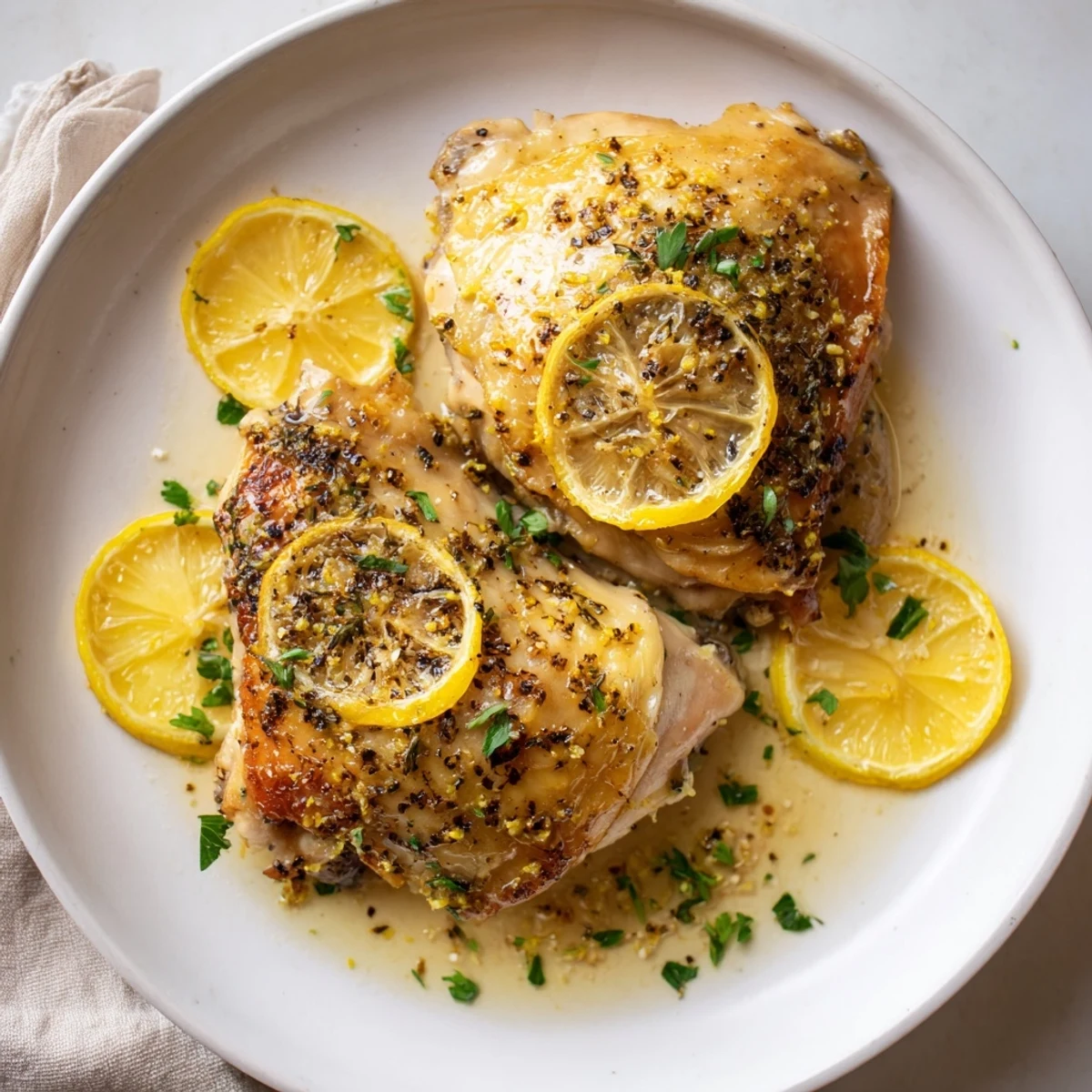
 Start by patting 8 bone-in, skin-on thighs dry. Whisk olive oil, lemon zest and juice, cracked black pepper, salt, garlic, thyme and oregano; toss the chicken to coat and marinate 10 minutes or up to 2 hours for deeper flavor. Roast skin-side up at 210°C/425°F for 30–35 minutes until 75°C/165°F internal temp; rest 5 minutes. Finish with parsley and lemon slices; broil 2–3 minutes for extra-crisp skin.
The sizzle of chicken skin hitting a hot pan is one of those sounds that instantly makes a kitchen feel alive, and these lemon pepper thighs deliver that moment every single time. I stumbled onto this combination during a week when groceries were running low and all I had were lemons from the tree outside and a nearly empty pepper grinder. What started as desperation turned into the most requested dinner in my house.
My neighbor Dave caught the smell drifting through the hallway one evening and appeared at my door with a bottle of wine, asking what on earth I was making. We ended up eating standing around my kitchen counter, tearing pieces of chicken straight from the pan.
Ingredients
- 8 bone in skin on chicken thighs: Bone in thighs stay far juicier than breasts, and the skin protects the meat while crisping up beautifully in the oven.
- Olive oil: Helps carry the lemon and pepper flavors deep into the meat while promoting browning.
- Zest of 2 lemons: The zest holds all the aromatic oils and brings way more punch than juice alone.
- 1/4 cup fresh lemon juice: Adds the bright acidic tang that cuts through the richness of the chicken fat.
- Freshly cracked black pepper: Pre ground pepper tastes flat by comparison, so crack it fresh and be generous.
- Kosher salt: Table salt is too fine and can over season quickly, kosher gives you better control.
- Garlic cloves: Fresh minced garlic melds with the lemon in a way that powder never quite manages.
- Dried thyme: An earthy backbone that bridges the gap between bright citrus and savory chicken.
- Dried oregano: Adds a subtle warmth and Mediterranean character to the overall flavor profile.
- Fresh parsley and lemon slices: Optional but a final sprinkle of parsley and a few lemon wheels make the plate look restaurant worthy.
Instructions
- Dry the chicken well:
- Pat every thigh thoroughly with paper towels because dry skin is the only path to real crispiness. Take your time here and dont rush past this step.
- Build the marinade:
- Whisk olive oil, lemon zest, lemon juice, cracked pepper, salt, garlic, thyme, and oregano in a large bowl until everything is blended. The smell should already be bright and irresistible.
- Coat and soak:
- Toss the chicken thighs in the marinade, turning each one so every surface gets covered. Ten minutes is the minimum but two hours in the fridge rewards you with noticeably deeper flavor.
- Arrange for roasting:
- Place the thighs skin side up on a rimmed baking sheet, spacing them out so hot air can circulate around each piece. Spoon any leftover marinade from the bowl directly over the top.
- Roast until golden:
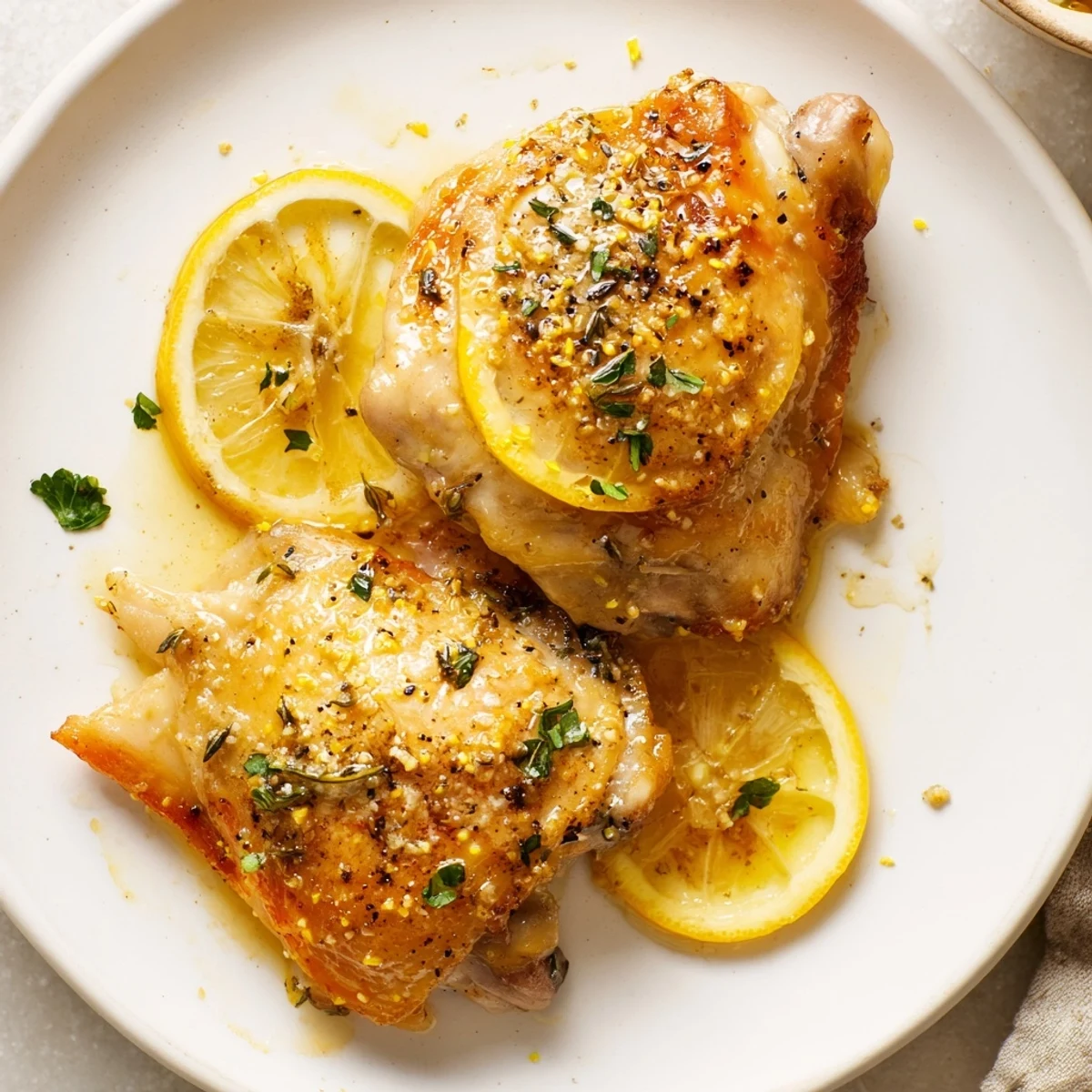
- Slide them into a 210 degree oven for 30 to 35 minutes until the skin is deeply bronzed and a thermometer reads 75 degrees at the thickest part. The juices should run clear and the edges will look almost caramelized.
- Rest and garnish:
- Let the chicken rest for five minutes so the juices settle back into the meat instead of running out onto the plate. Scatter chopped parsley and tuck lemon slices around the edges before serving.
 Save to Pinterest
 There is something deeply satisfying about pulling a sheet pan of golden chicken from the oven while the kitchen smells like roasted garlic and citrus. It turns an ordinary Tuesday into a meal worth sitting down for.
Getting That Skin Extra Crispy
After making this recipe dozens of times, I learned that the secret is starting with bone dry chicken and a truly hot oven. Any moisture left on the skin creates steam instead of browning, so pat those thighs like you mean it.
What to Serve Alongside
Roasted potatoes drink up the lemony pan juices beautifully, and a simple green salad with vinaigrette cuts the richness perfectly. Rice also works if you want something to soak up every last drop of flavor.
Storing and Reheating Leftovers
Leftovers keep well in the fridge for up to three days and reheat best in a hot oven rather than the microwave to preserve the skin texture.
- Store in an airtight container with the skin facing up so it does not get soggy against the juices.
- Reheat at 190 degrees for about ten minutes to bring back some of the original crispness.
- Never skip the resting period after reheating because it makes the meat taste as good as fresh.
 Save to Pinterest
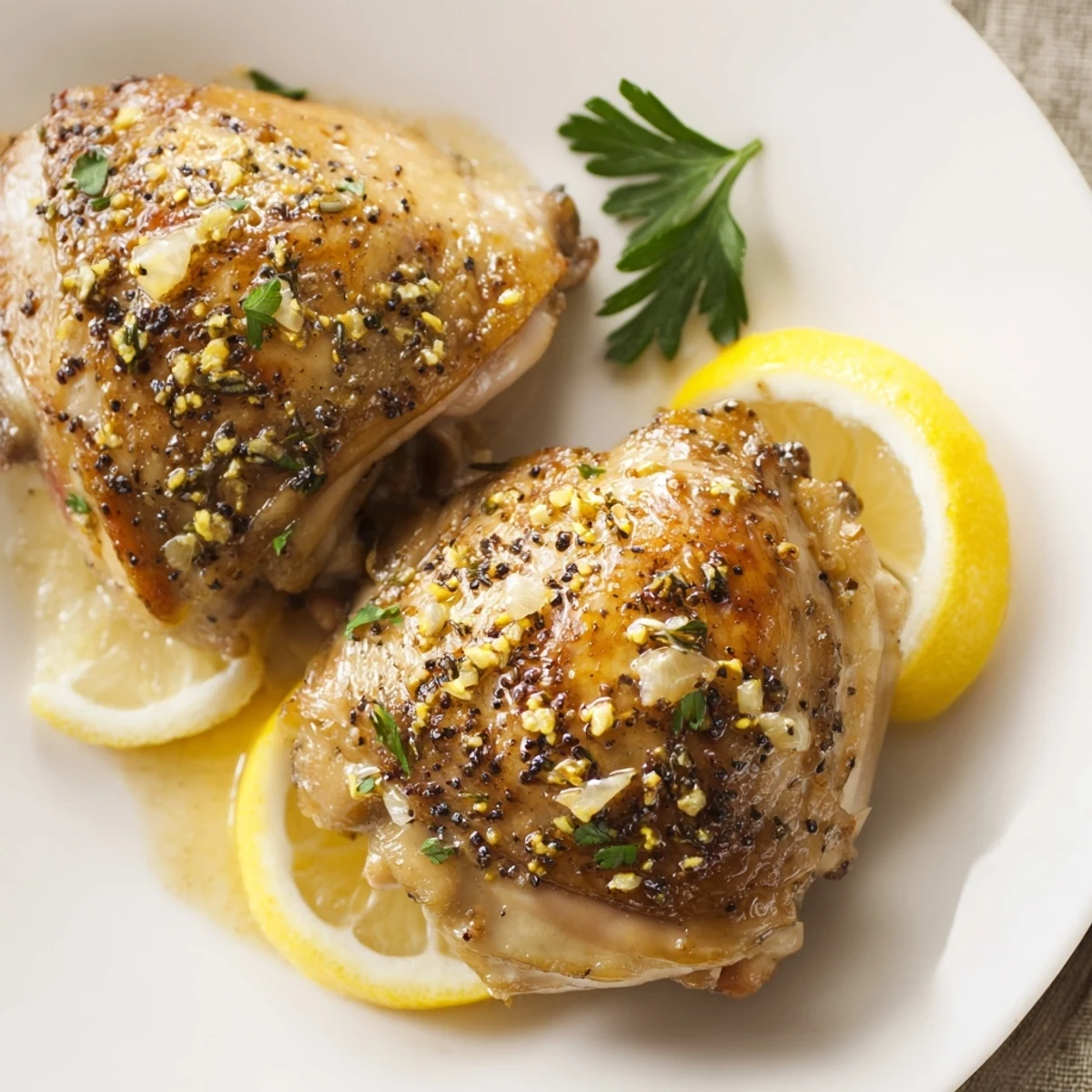
 This is the kind of recipe that earns a permanent spot in your weekly rotation because it asks so little and gives so much back. Make it once and you will find yourself reaching for lemons every time you see chicken thighs on sale.
Recipe Questions
- → How long should I marinate the thighs?
-
Marinate for at least 10 minutes to impart brightness; 30–120 minutes yields deeper flavor. Avoid very long acidic contact (overnight) as intense citrus can start to firm the meat texture.
- → How do I get extra-crispy skin?
-
Pat the skin thoroughly dry, leave space between pieces on the pan, roast at 210°C/425°F skin-side up, and finish under the broiler 2–3 minutes. High initial heat and dry skin are key.
- → Can I use boneless or skinless thighs?
-
Yes. Boneless thighs will cook faster—check at 20–25 minutes. Skinless pieces won't crisp, so shorten cook time and watch internal temperature to reach 75°C/165°F.
- → Can this be prepared ahead?
-
Yes. Marinate the chicken in the fridge up to 2 hours ahead, then bring close to room temperature before roasting. Cooked thighs reheat best in a hot oven to restore crispness.
- → What sides pair well with these thighs?
-
Roasted potatoes, steamed rice, or a bright green salad complement the lemon and pepper notes. Grilled vegetables or simple pilaf also work well for weeknight menus.
- → Is this suitable for a gluten-free diet?
-
Yes—these ingredients are naturally gluten-free. Always check labels on spices and seasonings to ensure no cross-contamination or added gluten-containing anti-caking agents.