
 Save to Pinterest
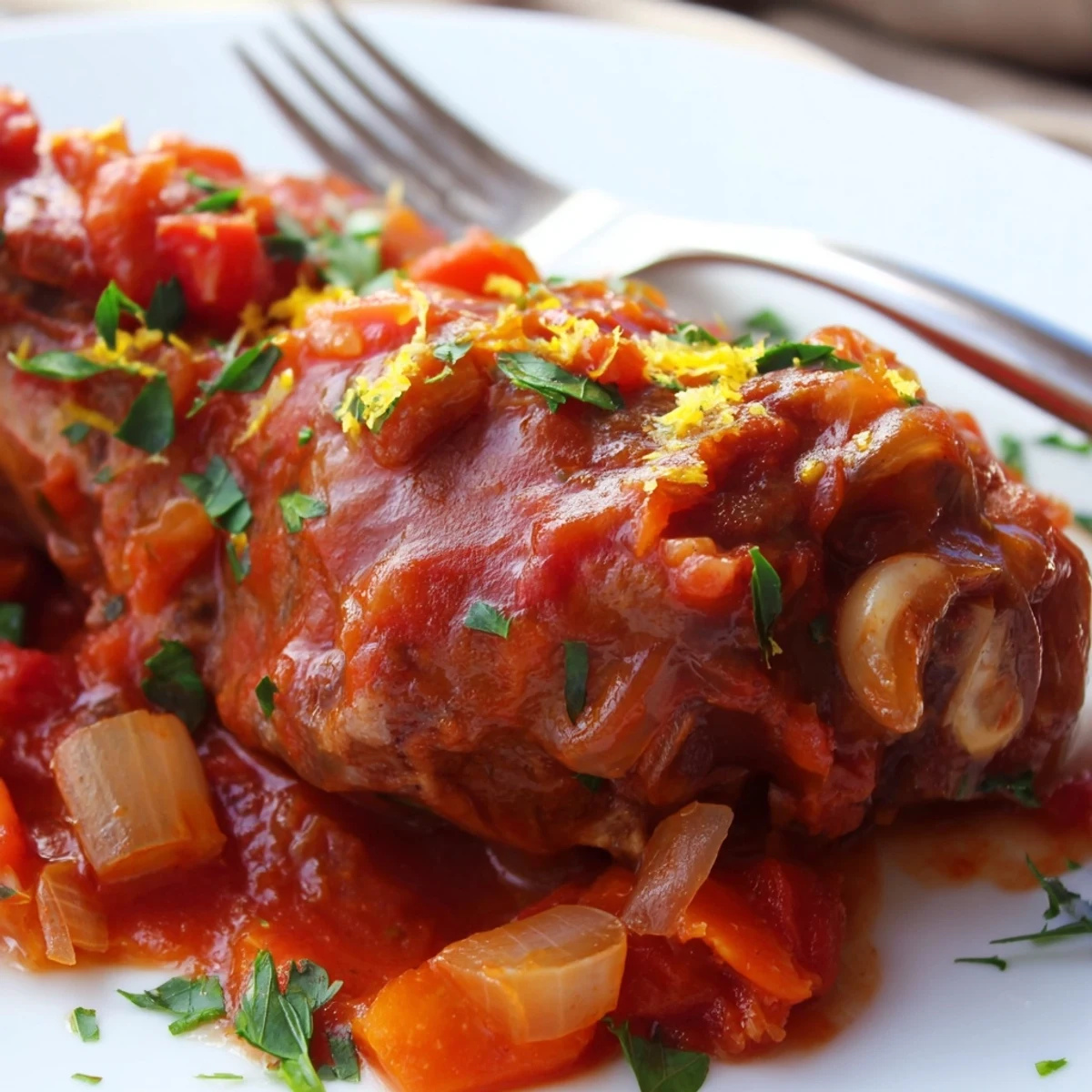
 This classic Italian dish features thick veal shanks braised slowly until meltingly tender in a rich sauce of white wine, San Marzano tomatoes, and aromatic vegetables. The meat becomes fork-tender after nearly three hours of gentle cooking, while the sauce develops deep, concentrated flavors from the browned bits, wine reduction, and fresh herbs like thyme and bay leaves. Traditional gremolata topping adds bright citrus and garlic notes that cut through the richness.
The first time I made osso buco, it was snowing outside and I had exactly three hours until dinner guests arrived. I'd never braised anything properly before, but there was something so comforting about the idea of meat slowly cooking in liquid while I sat nearby with a glass of wine. When I finally pulled that Dutch oven from the oven, the smell hit me first—rich, deep, impossibly fragrant. The meat fell apart at the mere suggestion of a fork, and I understood why this dish has endured for generations.
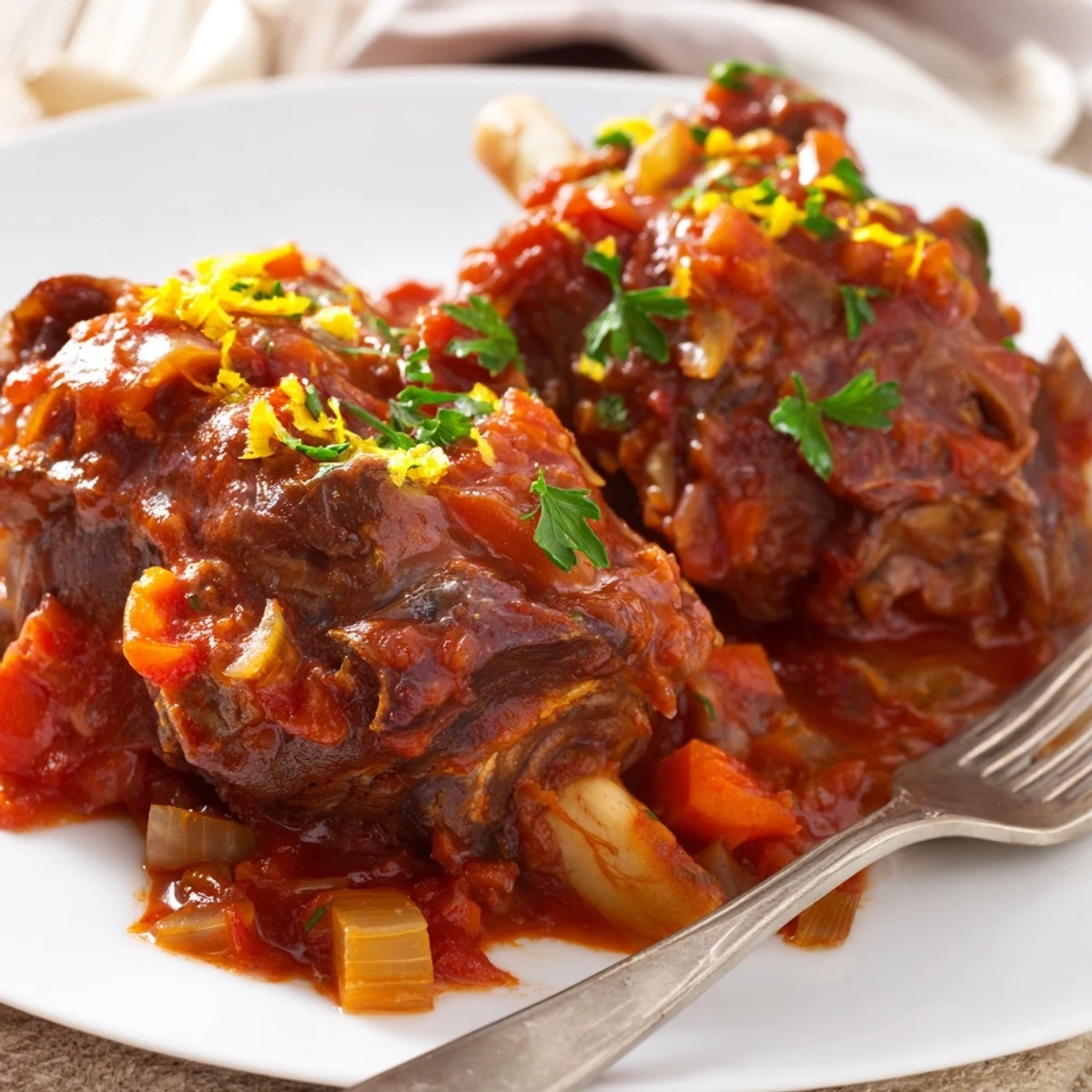
I made this for my father's birthday last winter, and he kept interrupting dinner to reminisce about his first trip to Milan. He'd had osso buco there, in some tiny restaurant he can no longer name, but said this version brought him right back to that marble table. The marrow alone—he said, holding up a shank with both hands like it was a sacred object—is worth the effort. That's when I realized this isn't just dinner, it's edible nostalgia.
Ingredients
- Veal shanks: Look for shanks cut about 2 inches thick with good marbling, as the fat and connective tissue are what transforms into that impossibly tender, gelatinous texture
- All-purpose flour: The lightest dusting helps develop that gorgeous golden crust when searing, though you can skip this step if youre keeping it gluten-free
- Kosher salt and black pepper: Generous seasoning here is essential, as youre building flavor in layers and each component needs to be properly seasoned on its own
- Olive oil and butter: The combination gives you a high smoke point for searing plus that nutty, rich flavor only butter can provide
- Yellow onion, carrots, celery: This classic soffritto base becomes the backbone of your sauce, so take your time dicing everything evenly
- Garlic: Minced fresh and added near the end so it doesnt turn bitter, providing that aromatic undertone that makes people ask what's in it
- Dry white wine: Something decent you'd actually drink, as it reduces down and concentrates into the sauce
- San Marzano tomatoes: Hand-crushing them yourself creates a rustic texture that feels more authentic than perfectly puréed tomatoes
- Chicken stock: Homemade is ideal, but a good-quality store-bought version works perfectly fine here
- Fresh thyme and bay leaves: These herbs infuse the braising liquid with their aromatic oils, and the bay leaves should be large and pliable, not brittle
- Lemon zest: Added during braising to cut through the richness and brighten everything just enough
- Fresh parsley: Both for cooking and finishing, providing that fresh green contrast against the deep red sauce
- Optional gremolata: The traditional finishing condiment of parsley, garlic, and lemon zest adds one last bright punch right before serving
Instructions
- Get your oven ready:
- Preheat to 325°F and position your oven rack in the lower third, giving you room to work when transferring that heavy pot later
- Prep your veal shanks:
- Pat them thoroughly dry with paper towels—this is crucial for getting a proper sear—then mix your flour, salt, and pepper in a shallow dish
- Dredge the shanks:
- Lightly coat each shank in the flour mixture, shaking off any excess, because you want a thin layer that crisps up, not a thick coating that turns gummy
- Heat your fat:
- In a large Dutch oven, warm the olive oil and butter over medium-high heat until the foam subsides and the butter smells nutty
- Sear the meat:
- Brown each shank on all sides for about 3 to 4 minutes per side, developing a deep golden crust that will provide incredible depth to your final sauce
- Build your base:
- Add the onions, carrots, and celery to the same pot, cooking for about 8 minutes until softened and fragrant, then stir in the garlic for just one minute
- Deglaze the pot:
- Pour in the white wine and scrape up all those browned bits from the bottom—the fond is where all the concentrated flavor lives
- Simmer briefly:
- Let the wine reduce for 2 to 3 minutes until it thickens slightly and the raw alcohol smell has cooked off
- Add your liquids and aromatics:
- Stir in the crushed tomatoes with their juices, chicken stock, thyme, bay leaves, and lemon zest until everything is well combined
- Nestle the meat back in:
- Return the veal shanks to the pot, arranging them so theyre mostly submerged in the liquid, and bring everything to a gentle simmer
- Braise until tender:
- Cover the pot and transfer to the oven for 2 to 2.5 hours, checking once to make sure the liquid is at a slow bubble rather than a rolling boil
- Finish and serve:
- Remove the bay leaves and skim any excess fat from the surface, then sprinkle with gremolata if you're using it and garnish with fresh parsley
 Save to Pinterest
 My friend Marco, who's actually from Milan, told me that in his family, the person who gets the shank with the most marrow is considered blessed for the entire week. I love that idea—that simple food can carry these little traditions and superstitions that make a meal feel like something more than just sustenance. Now whenever I make this, I make sure to distribute the shanks thoughtfully.
The Art of the Sear
That golden crust you develop on the veal shanks isn't just for looks—it's the foundation of your entire sauce's depth and complexity. When meat browns, it undergoes the Maillard reaction, creating hundreds of new flavor compounds that dissolve into the braising liquid. Take your time with this step and don't crowd the pot, or the meat will steam instead of sear. Work in batches if necessary, and resist the urge to flip too early.
Choosing Your Wine
Many home cooks assume they need an expensive wine for braising, but honestly, something decent and drinkable is all you need. You're not looking for complexity so much as acidity and body—Pinot Grigio or Sauvignon Blanc work beautifully. Just make sure it's dry, as sweet wines will give your final sauce an odd, cloying edge. And never use cooking wine, which is packed with salt and additives.
Making It Your Own
While traditional osso buco is made with veal, I've had excellent results using beef shanks when veal is unavailable or too expensive. The beef version is slightly heartier and more intensely flavored, while veal remains more delicate and refined. Either way, look for shanks with plenty of connective tissue—those collagen-rich sections are what transform into that luxurious, spoon-coating texture.
- If you're avoiding flour, try a light dusting of cornstarch or arrowroot instead, though the sauce may be slightly less velvety
- The gremolata is optional, but that last-minute hit of fresh garlic, lemon, and parsley really does transform the dish
- This recipe actually tastes better made a day ahead, giving the flavors time to meld and the fat to rise to the surface for easy skimming
 Save to Pinterest
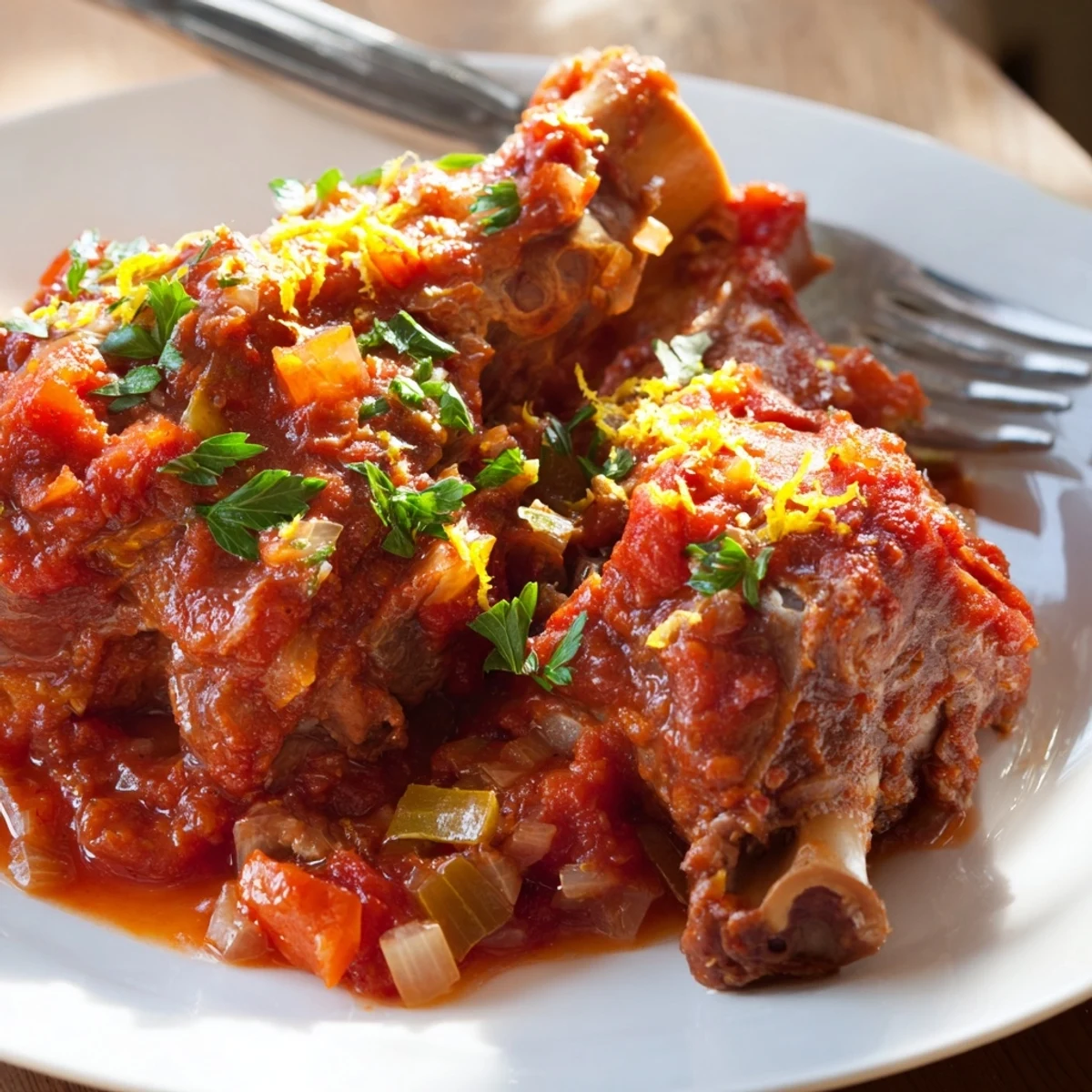
 There's something profoundly satisfying about a dish that rewards patience so generously. This is slow cooking at its finest—simple ingredients, minimal technique, and time doing all the heavy lifting.
Recipe Questions
- → What cut of meat works best for osso buco?
-
Veal shanks about 2 inches thick are traditional, cut from the shin section. The connective tissue breaks down during braising, creating incredibly tender meat and a naturally rich, gelatinous sauce. Beef shanks make an excellent substitute with similar results.
- → Why is dredging in flour recommended?
-
Light flour coating helps achieve a beautiful golden-brown crust when searing, which adds depth of flavor. The flour also slightly thickens the braising liquid. For gluten-free versions, simply skip this step or use gluten-free flour blend.
- → What should I serve with osso buco?
-
Risotto alla Milanese is the classic pairing, but creamy polenta, mashed potatoes, or crusty bread work beautifully to soak up the flavorful sauce. The dish is substantial enough to stand alone with a simple green salad.
- → Can osso buco be made ahead?
-
Absolutely—the flavors actually improve overnight. Prepare completely, cool, and refrigerate. The fat will solidify on top for easy removal. Reheat gently on the stovetop, adding a splash of stock if needed to loosen the sauce.
- → What is gremolata and why add it?
-
Gremolata is a bright Italian condiment of chopped fresh parsley, minced garlic, and lemon zest. Sprinkled over just before serving, it provides fresh, zesty contrast that cuts through the rich, tender meat and enhances the overall dish beautifully.
- → How do I know when osso buco is done?
-
The veal is ready when it's fork-tender and the meat pulls away easily from the bone. This typically takes 2-2.5 hours of braising. The meat should offer no resistance and practically fall apart when gently prodded with a fork.